
CategoriesAirports

Best Alternate Airports for Thiruvananthapuram International Airport, VOTV airport, TRV airport – A Complete Guide

1. Airport Name: MADURAI INTERNATIONAL AIRPORT

• ICAO Code: VOMD
• IATA Code: IXM
• City: MADURAI
• Distance in Nautical Miles: 107 NM
• Operating hours of VOMD Airport: H24
• Restrictions if any: NIL AS OF DATE
• AOE (Airport of Entry): YES (International Airport)
• Customs/ Immigration at VOMD Airport: Available
• Type of Airport: CIVIL
• RFFS at VOMD Airport: CAT VI
• Fuel availability: JET A1
• Ground Handler at Madurai International Airport: VVIP FLIGHT PRIVATE LIMITED (ops@vvipflight.com)
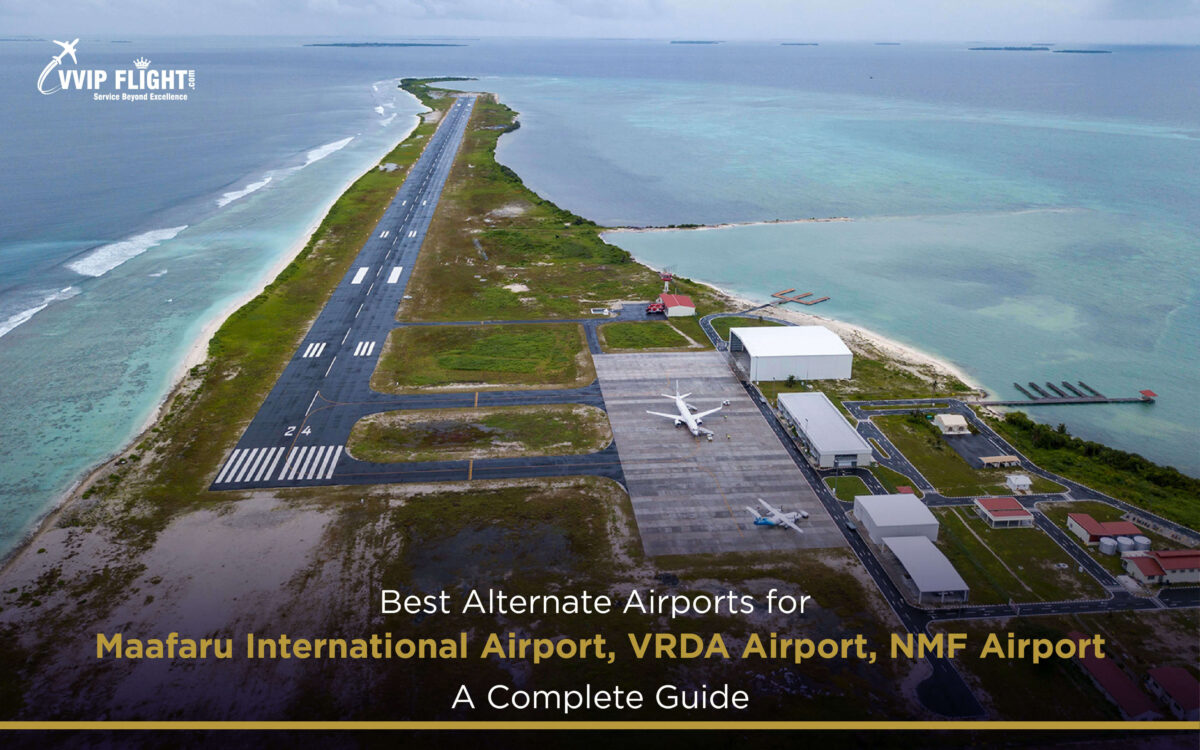
2. Airport Name: COCHIN INTERNATIONAL AIRPORT

• ICAO Code: VOCI
• IATA Code: COK
• City: COCHIN
• Distance in Nautical Miles: 105 NM
• Operating hours of VOCI Airport: H24
• Restrictions, if any: 0830 UTC – 1200 UTC (EVRY 2nd TUE)
• AOE (Airport of Entry) –YES (International Airport)
• Customs/ Immigration at VOCI Airport: Available
• Type of Airport: CIVIL
• RFFS at VOCI Airport: CAT VIII
• Fuel Availability: JET A1
• Ground Handler at Cochin International Airport: VVIP FLIGHT PRIVATE LIMITED (ops@vvipflight.com)
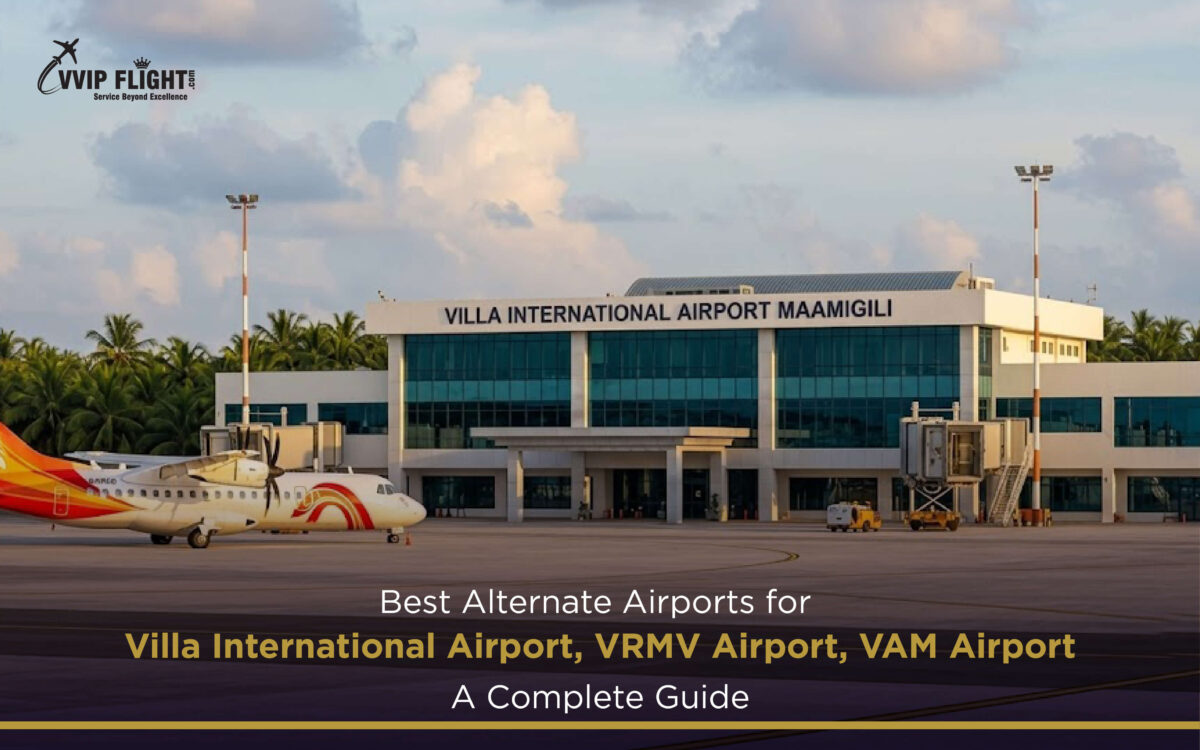
3. Airport Name: CALICUT INTERNATIONAL AIRPORT

• ICAO Code: VOCL
• IATA Code: CCJ
• City: CALICUT
• Distance in Nautical Miles: 169 NM
• Operating hours of VOCL Airport: H24
• Restrictions if any: 0900 UTC – 1200 UTC (EVERY TUE & THU)
• AOE (Airport of Entry): YES
• Customs/ Immigration at VOCL Airport: AVAILABLE
• Type of Airport: CIVIL
• RFFS at VOCL Airport: CAT VII
• Fuel Availability: JET A1
• Ground Handler at Calicut Airport: VVIP FLIGHT PRIVATE LIMITED (ops@vvipflight.com)
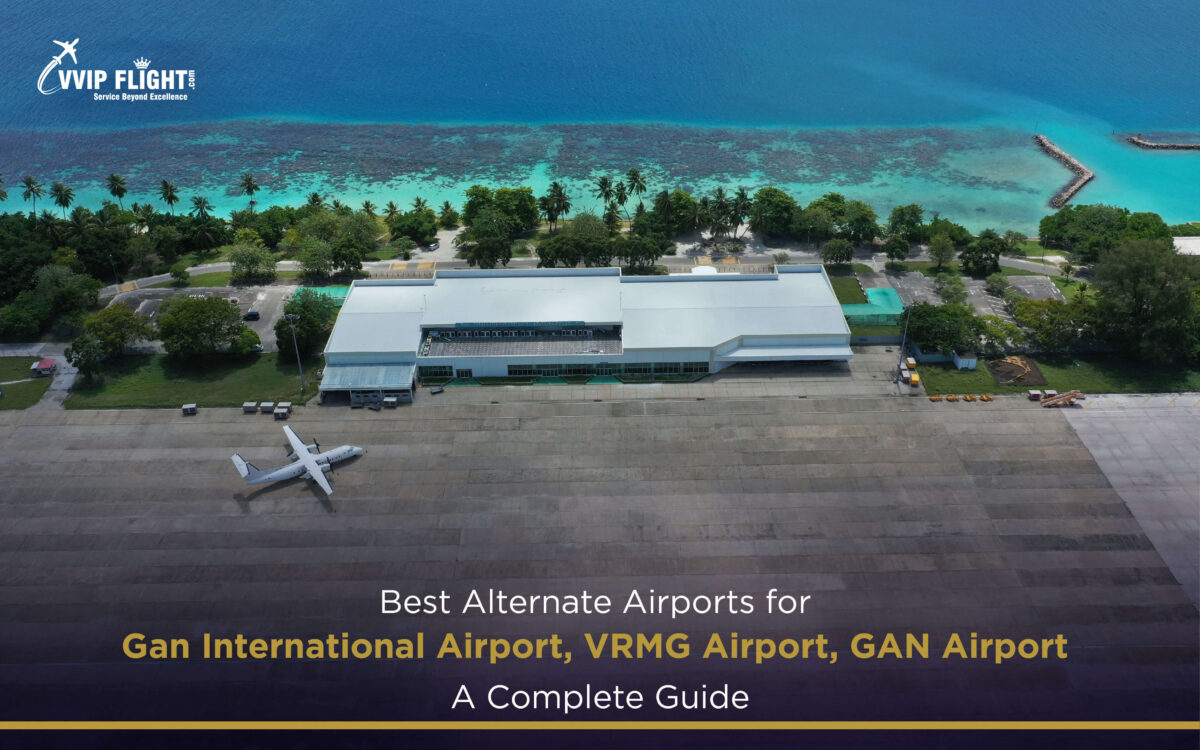
4. Airport Name: KANNUR INTERNATIONAL AIRPORT

• ICAO Code: VOKN
• IATA Code: CNN
• City: KANNUR
• Distance in Nautical Miles: 221 NM
• Operating hours of VOKN Airport: H24
• Restrictions International Airport if any: NIL AS OF DATE
• AOE (Airport of Entry) –YES (International Airport)
• Customs/ Immigration at VOKN Airport: Available
• Type of Airport: CIVIL
• RFFS of VOKN Airport: CAT IX
• Fuel Availability: JET A1
• Ground Handler at Kannur International Airport: VVIP FLIGHT PRIVATE LIMITED (ops@vvipflight.com)

5. Airport Name: COIMBATORE AIRPORT

• ICAO Code: VOCB
• IATA Code: CJB
• City: COIMBATORE
• Distance in Nautical Miles: 152 NM
• Operating hours of VOCB Airport: H24
• Restrictions, if any: NIL AS OF DATE
• AOE (Airport of Entry): YES (International airport)
• Customs/ Immigration at VOCB Airport: AVAILABLE
• Type of Airport: CIVIL
• RFFS at VOCB Airport: CAT VIII
• Fuel Availability: JET A1
• Ground Handler at Coimbatore Airport: VVIP FLIGHT PRIVATE LIMITED (ops@vvipflight.com)

CategoriesAirports

Overflight Permits for India: Requirements and Application Process

Any foreign-registered aircraft transiting Indian airspace without landing requires an overflight permit. This applies regardless of the aircraft type, the purpose of the flight, or the route being flown. There is no exemption based on prior permits, bilateral agreements between individual operators, or the frequency of the route.

Understanding exactly what an overflight permit covers, what it requires, and how long it takes is essential for any international operator whose routing crosses Indian airspace, whether the transit is a single crossing or a multi-leg route that passes through Indian airspace on multiple occasions.

What an Overflight Permit Covers

An overflight permit authorizes a specific foreign-registered aircraft to transit Indian airspace on a specific routing during a specific time window. It does not authorize the aircraft to land, take on fuel, or make any stop within India. If any of those elements are required, a separate landing permit or technical landing permit is needed.

The permit is tied to the exact routing submitted in the application. A change to the planned track, even a minor deviation caused by weather or ATC instruction, may require the routing details to be updated and, in some cases, the permit to be revised before the flight can continue.

Processing Time for Indian Overflight Permits

For most foreign-registered aircraft, an overflight permit is processed within 1 working day, meaning the flight can operate on the second day after the application is submitted. This is the standard timeline for aircraft originating from, or operating on behalf of, countries not subject to extended processing requirements.

For flights originating from China, North Korea, Pakistan, Afghanistan, Iraq, Somalia, or Nigeria, the processing time extends to 3 working days, with the flight operating on the fourth day after submission. This extended timeline applies uniformly regardless of the operator’s history or the specific routing of the flight.

Documentation Required for an Overflight Permit

An overflight permit application requires less documentation than a landing permit, but the information provided must still be complete and accurate. The standard requirements include full flight details covering the route, entry and exit points into Indian airspace, and the estimated time of crossing, crew details including the name and nationality of the Pilot in Command, and aircraft documents including the Certificate of Airworthiness and Certificate of Registration.

A General Declaration and passenger manifest are not required for a pure overflight since no landing is taking place, but crew details and aircraft documentation must still be accurate and current. An expired Certificate of Airworthiness or a crew list that does not match the actual pilot in command will cause the application to be returned.

Entry and Exit Points Into Indian Airspace

India’s airspace is divided into Flight Information Regions managed by the Airports Authority of India. For overflight operations, the entry and exit points into Indian airspace, along with the estimated time of crossing each significant waypoint, must be specified in the permit application. The routing should reflect the actual planned track rather than a generic estimate.

Once the aircraft enters Indian airspace, the ATC of the relevant Flight Information Region will provide an Air Defence Clearance number, which is the confirmation that the aircraft is cleared to proceed on its authorized routing. The pilot in command may be required to confirm this clearance before continuing.

Validity of an Overflight Permit

Like landing permits, overflight permits are time-bound. The authorization covers the specific time window stated in the application, and a flight that crosses Indian airspace significantly outside that window may not be covered by the existing permit. Operators managing multi-leg routes that cross Indian airspace on an outbound and return leg should confirm whether a single permit covers both crossings or whether separate applications are required for each direction.

Approach Plates for Military Airspace

Operators whose planned routing crosses airspace associated with Indian military or joint-use civilian and military airports should be aware that approach plates for these facilities are classified and are not published in the India Aeronautical Information Publication. This does not affect a pure overflight that does not interact with those facilities, but operators planning any contingency diversion into a military-use airfield should factor this into pre-flight planning.

Common Errors in Overflight Permit Applications

The most frequent errors in overflight permit applications are inaccurate entry and exit timing, a mismatch between the aircraft registration submitted and the aircraft actually operating the flight, and failure to account for the extended timeline that applies to restricted-origin countries. A second common error is assuming that an overflight permit obtained for a previous operation on the same route remains valid for a subsequent flight. Each operation requires its own application.

Overflight Permits for Neighboring Countries on the Same Route

Many routes that cross Indian airspace also cross the airspace of neighboring countries in the same sector. Nepal, Bangladesh, Sri Lanka, Bhutan, and the Maldives each have their own overflight permit requirements, processing timelines, and documentation standards. An overflight permit for India does not cover any portion of the route that falls within a neighboring country’s airspace.

Operators planning multi-country routes across South Asia should treat each country’s airspace authorization as a separate application process and ensure that all permits on the route are confirmed before departure, since a gap in one country’s coverage can disrupt the entire route even if all other permits are in order.

VVIP Flight manages overflight permit applications across India, Nepal, Bangladesh, Sri Lanka, Bhutan, and the Maldives, which means the full route can be coordinated through a single point of contact rather than through separate applications to each country’s civil aviation authority.

What Happens If an Overflight Aircraft Needs to Divert and Land

An overflight permit does not authorize a landing. If an aircraft operating on an overflight permit needs to divert into an Indian airport due to a medical emergency, technical issue, or weather requirement, the landing will be treated as an emergency entry rather than an authorized traffic stop.

Emergency landings are handled by ATC and airport authorities on a case-by-case basis and are not subject to the same pre-authorization requirements as scheduled landings. However, any subsequent departure from that airport once the emergency is resolved may require a separate landing permit to be obtained before the aircraft can legally depart as a non-scheduled traffic stop rather than an emergency arrival. Operators should clarify this with their ground handler at the diversion airport as soon as the aircraft is on the ground.

How VVIP Flight Manages Overflight Permit Applications

At VVIP Flight, we handle overflight permit applications for operators transiting Indian airspace as part of a broader trip support framework. This includes confirming the correct routing details, verifying documentation before submission, and liaising directly with the relevant authorities through to approval. For operators on routes that cross Indian airspace regularly, we can coordinate permit applications alongside other pre-flight requirements to ensure the full operation runs on a single managed timeline.

For assistance with overflight permits for India or any other permit requirement across South Asia, please contact our operations team at ops@vvipflight.com

Disclaimer: Kindly note that the information provided in the above article is subject to change without prior notice. We recommend contacting our operations team for the latest regulations, updates, and accurate information before planning your trip.

Frequently Asked Questions (FAQs)

  1. Does every foreign aircraft transiting Indian airspace need an overflight permit?

Yes. All foreign-registered aircraft transiting Indian airspace without landing require an overflight permit, regardless of aircraft type, purpose, or routing.

  1. How long does an Indian overflight permit take to process?

Standard overflight permits are processed within 1 working day. For flights originating from restricted countries including China, North Korea, Pakistan, Afghanistan, Iraq, Somalia, and Nigeria, the processing time extends to 3 working days.

  1. What documents are needed for an India overflight permit?

Applications require full flight and routing details, crew details including the Pilot in Command’s name and nationality, and current aircraft documents including the Certificate of Airworthiness and Certificate of Registration.

  1. Does an overflight permit cover both outbound and return crossings of Indian airspace?

Not necessarily. Operators should confirm whether a single permit covers multiple crossings of Indian airspace on the same routing or whether separate applications are required for each direction.

  1. What is the Air Defence Clearance number in the context of an overflight?

The ADC number is issued by the ATC of the relevant Flight Information Region once the aircraft enters Indian airspace, confirming the aircraft is cleared to proceed on its authorized routing.

CategoriesAirports

Common Challenges Foreign Aircraft Operators Face When Applying for Indian Flight Permits

Applying for a flight permit to operate into India is not complicated in principle. The process has a defined structure, fixed timelines, and clear documentation requirements. In practice, however, foreign aircraft operators consistently encounter the same set of avoidable problems, most of which stem not from the regulations themselves but from a lack of familiarity with how those regulations are applied.

This article identifies the most common challenges operators face when applying for Indian flight permits and explains what each one means for operational timelines.

Submitting Incomplete or Inconsistent Documentation

The single most common reason a permit application is delayed in India is incomplete documentation. DGCA requires a specific set of documents for each permit category, and an application that arrives with anything missing is typically returned for correction rather than processed with a query.

For a standard landing permit, the required documents include the Certificate of Airworthiness, Certificate of Registration, Noise Certificate, Insurance Certificate, and Air Operator Certificate where applicable, alongside complete flight details, crew details, and passenger details, including the General Declaration and passenger manifest. A missing Noise Certificate or an AOC that has expired since the last operation is enough to stall the application entirely.

The correction process does not simply pause the clock. It restarts it. An operator who submits an incomplete application on Day 1, receives a correction notice on Day 2, and resubmits on Day 3 is now effectively three days behind the original timeline with no reduction in the processing period.

Not Accounting for Country of Origin Restrictions

India applies an extended processing timeline to flights originating from a specific list of countries: China, North Korea, Pakistan, Afghanistan, Iraq, Somalia, and Nigeria. For these origins, a standard landing permit takes 7 working days rather than 3, and overflight and technical stop permits take 3 working days rather than 1.

This is one of the most consistently overlooked variables in permit planning. Operators familiar with the standard 3-day timeline plan their schedules accordingly, then find on submission that their origin country triggers the extended timeline. By the time this is discovered, it is frequently too late to adjust the schedule without disrupting the entire operation.

The solution is straightforward: confirm which timeline applies before the schedule is finalized, not after the application is submitted.

Misunderstanding Permit Validity

A landing permit issued by DGCA is not an open-ended authorization. It is valid within a window of plus or minus 48 hours from the Estimated Time of Departure stated in the application. Any deviation beyond this window, and any change to the origin or destination airport, requires the permit to be formally revised. A revised permit follows the same processing timeline as a new application.

Many operators treat the permit as a standing clearance once obtained, and only discover the validity restriction when a schedule change forces a revision. Planning for this from the outset means building schedule changes into the permit application process rather than treating them as a separate operational issue.

Applying Too Close to the Date for Defense Airports

Operations into Indian defense or military-controlled airfields require significantly longer lead times than civilian airports. The standard processing time is 3 to 4 weeks, and this timeline reflects genuine coordination requirements between civil aviation and defense authorities rather than administrative delay.

Operators who apply for defense airport permits with a week or two to spare almost always find that the permit cannot be expedited regardless of the urgency stated. The approval chain involves multiple authorities working in sequence, and there is no mechanism to accelerate it beyond the standard timeline. The only reliable solution is to apply at least one month in advance, ideally earlier for complex missions.

Assuming Weekend and Holiday Processing is Available

DGCA offices and civil aviation authorities in India are closed on weekends and public holidays. A permit correction, revision, or new application submitted on a Friday evening will not be processed until Monday at the earliest, and national holidays add further gaps to any timeline that spans them.

This matters most for operators managing tight schedules or last-minute itinerary changes. A schedule deviation that requires a permit revision on a Saturday does not simply add one day to the timeline; it adds at least two, and more if a public holiday falls nearby.

Providing Inaccurate Passenger or Crew Details

Permit applications require the details of each passenger and crew member to match their travel documents exactly. A mismatched name, an incorrect passport number, or a crew list that reflects the planned roster rather than the confirmed roster creates a discrepancy that surfaces either during the approval process or at the point of entry.

For diplomatic and VVIP movements, this is particularly consequential. Only the individuals named in the authorization are granted access under the approved permit, and last-minute changes to the passenger list require formal revision through the same channel as the original application.

Treating All Airports as Operationally Equivalent

The permit process is the same regardless of which Indian airport the aircraft is operating into, but the ground conditions at the destination are not. Operators who secure a permit for Mumbai, for example, without separately confirming parking availability may find on arrival that the 72-hour GA parking limitation means the aircraft cannot remain for the planned duration of the visit.

A permit authorizes the flight. It does not reserve parking, confirm slot availability, or guarantee ground services. These elements require separate coordination in parallel with the permit application, and gaps between them are a frequent source of operational disruption.

Not Understanding the Difference Between Permit Categories

A landing permit, a technical landing permit, and an overflight permit are three distinct instruments with different requirements and different processing timelines. Operators who apply for the wrong category create delays that cannot be resolved without withdrawing the application and restarting with the correct one.

A technical landing permit covers a brief stop for fuel or operational purposes where no passengers are disembarking or embarking and no full traffic stop is taking place. A standard landing permit is required whenever passengers are arriving at or departing from an Indian airport as their intended destination. An overflight permit covers transit of Indian airspace without any landing. Submitting a technical stop permit for what is actually a full traffic landing, or vice versa, is a documentation error that will be identified during the approval process and will require resubmission.

Operators unfamiliar with the Indian regulatory framework sometimes assume that the permit category is interchangeable or that a landing permit covers a technical stop. It does not. Each category has specific documentation requirements, and the processing timelines differ accordingly.

Overlooking the Role of Security Clearance for Sensitive Operations

For certain flight categories, including flights with passengers or crew from specific backgrounds, flights carrying cargo of a sensitive nature, or flights into defense airfields, additional security coordination may be required alongside the standard permit process. This coordination runs through different channels than the standard civil aviation permit process and does not automatically progress in parallel with it.

Operators who focus entirely on the civil aviation permit timeline and overlook the security coordination requirement may find that the permit is ready, but the operation cannot proceed because security clearance is still pending. This is particularly relevant for defense airport operations and for movements involving official government guests or sensitive cargo.

How VVIP Flight Supports Permit Applications for Foreign Operators

At VVIP Flight, we manage the complete permit application process for foreign aircraft operators planning operations into India, including identifying the correct permit category, confirming documentation requirements in advance, and submitting applications correctly the first time. For operations involving defense airports, restricted-origin countries, or diplomatic missions, we plan the application timeline around the specific requirements that apply, rather than using a standard template that may not fit the operation.

For assistance with any flight permit requirement for your next operation into India, please contact our operations team at ops@vvipflight.com

Disclaimer: Kindly note that the information provided in the above article is subject to change without prior notice. We recommend contacting our operations team for the latest regulations, updates, and accurate information before planning your trip.

Frequently Asked Questions (FAQs)

  1. Why do Indian flight permit applications get rejected or delayed?

The most common reasons are incomplete documentation, inconsistent passenger or crew details, and failure to account for extended timelines that apply to restricted-origin countries.

  1. What documents are required for an Indian landing permit?

A standard application requires the Certificate of Airworthiness, Certificate of Registration, Noise Certificate, Insurance Certificate, AOC where applicable, and complete flight, crew, and passenger details, including the General Declaration and passenger manifest.

  1. What happens if a schedule change occurs after a permit is issued?

Any change to the origin or destination airport requires a formal permit revision, which follows the same processing timeline as the original application. Changes beyond the permitted validity window of plus or minus 48 hours from ETD also require revision.

  1. How far in advance should a permit be applied for when operating into a defense airport?

At least one month in advance. Defense airport permits take 3 to 4 weeks to process and cannot be expedited regardless of urgency.

  1. Can permit applications be processed over the weekend in India?

No. DGCA and civil aviation offices are closed on weekends and public holidays. Applications or revisions submitted outside working hours will not be processed until the next working day.

CategoriesAirports

Best Alternate Airports for Sheikh Ul Alam International Airport (Sri Nagar), VISR airport, SXR airport – A Complete Guide

  1. Airport Name: AMRITSAR AIRPORT
  • ICAO Code: VIAR
  • IATA Code: ATQ
  • City: AMRITSAR
  • Distance in Nautical Miles: 136 NM
  • Operating hours of VIAR airport: H24
  • Restrictions if any: 0815 UTC – 1615 UTC (DLY)
  • AOE (Airport of Entry): YES (International Airport)
  • Customs/ Immigration at VIAR airport: AVAILABLE
  • Type of Airport: CIVIL
  • RFFS at VIAR airport: CAT VIII
  • Fuel availability: JET A1
  • Ground Handler at AMRITSAR AIRPORT: VVIP FLIGHT PRIVATE LIMITED (ops@vvipflight.com)

  1. Airport Name: INDIRA GANDHI INTERNATIONAL AIRPORT
  • ICAO Code: VIDP
  • IATA Code: DEL
  • City: DELHI
  • Distance in Nautical Miles: 346 NM
  • Operating hours of VIDP airport: H24
  • Restrictions if any: NIL AS OF DATE
  • AOE (Airport of Entry) – YES (International Airport)
  • Customs/ Immigration at VIDP airport: Available
  • Type of Airport: CIVIL
  • RFFS at VIDP airport: CAT IX
  • Fuel availability: JET A1
  • Ground Handler at Delhi International Airport: VVIP FLIGHT PRIVATE LIMITED (ops@vvipflight.com)

  1. Airport Name: CHANDIGARH AIRPORT
  • ICAO Code: VICG
  • IATA Code: IXC
  • City: CHANDIGARH
  • Distance in Nautical Miles: 200 NM
  • Operating hours of VICG airport: 0030 UTC – 1730 UTC (MON-SAT) 0300 UTC – 0800 UTC (SUN)
  • Restrictions if any: NIL AS OF DATE
  • AOE (Airport of Entry): YES (INTERNATIONAL AIRPORT)
  • Customs/ Immigration at VICG airport: AVAILABLE
  • Type of Airport: DEFENCE
    Note: VICG is a defense airport and is not recommended as an alternate for foreign-registered aircraft.
  • RFFS at VICG airport: CAT VII
  • Fuel availability: JET A1
  • Ground Handler at Chandigarh airport: VVIP FLIGHT PRIVATE LIMITED (ops@vvipflight.com)

  1. Airport Name: JAIPUR INTERNATIONAL AIRPORT
  • ICAO Code: VIJP
  • IATA Code: JAI
  • City: JAIPUR
  • Distance in Nautical Miles: 430 NM
  • Operating hours of VIJP airport: H24
  • Restrictions if any: NOTAM 0900 UTC – 1100 UTC (EVERY TUE & WED)
  • AOE (Airport of Entry) –YES (International Airport)
  • Customs/ Immigration at VIJP airport: Available
  • Type of Airport: CIVIL
  • RFFS of VIJP airport: CAT IX
  • Fuel availability: JET A1
  • Ground Handler at Jaipur international airport: VVIP FLIGHT PRIVATE LIMITED (ops@vvipflight.com)

5• Airport Name: JAMMU AIRPORT

  • ICAO Code: VIJU
  • IATA Code: IXJ
  • City: JAMMU
  • Distance in Nautical Miles: 78 NM
  • Operating hours of VIJU airport: 0030 UTC – 1530 UTC (DLY)
  • Restrictions if any: NIL AS OF DATE
  • AOE (Airport of Entry): No (Domestic airport)
  • Customs/ Immigration at VIJU airport: NOT AVAILABLE
  • Type of Airport: CIVIL
  • RFFS at VIDN airport: CAT V
  • Fuel availability: JET A1
  • Ground Handler at Jammu airport: VVIP FLIGHT PRIVATE LIMITED (ops@vvipflight.com)

Note: Please note that Noida International Airport (Jewar Airport), DXN airport, VIND airport has not been included in the list, as it has not yet commenced flight operations.

CategoriesAirports

Best Alternate Airports for Manohar International Airport, VOGA Airport, GOX Airport – A Complete Guide

  1. Airport Name: BANGALORE (HAL- HINDUSTAN AERONAUTICAL AIRPORT) AIRPORT
  • ICAO Code: VOBG
  • IATA Code: NONE (HAL)
  • City: BANGALORE
  • Distance in Nautical Miles: 267 NM
  • Operating hours of VOBG Airport: H24
  • Restrictions if any: NIL AS OF DATE
  • AOE (Airport of Entry): NO
  • Customs/ Immigration at VOBG Airport: NOT AVAILABLE
  • Type of Airport: CIVIL
  • RFFS at VOBG Airport: CAT VII
  • Fuel availability: JET A1
  • Ground Handler at Bangalore Airport: VVIP FLIGHT PRIVATE LIMITED (ops@vvipflight.com)

  1. Airport Name: KEMPAGOWDA INTERNATIONAL AIRPORT
  • ICAO Code: VOBL
  • IATA Code: BLR
  • City: BANGALORE
  • Distance in Nautical Miles: 261 NM
  • Operating hours of VOBL Airport: H24
  • Restrictions if any: NIL AS OF DATE
  • AOE (Airport of Entry) –YES (International Airport)
  • Customs/ Immigration at VOBL Airport: Available
  • Type of Airport: CIVIL
  • RFFS at VOBL Airport: CAT IX
  • Fuel availability: JET A1
  • Ground Handler at Kempagowda International Airport: VVIP FLIGHT PRIVATE LIMITED (ops@vvipflight.com)

  1. Airport Name: HYDERABAD (BEGUMPET) AIRPORT
  • ICAO Code: VOHY
  • IATA Code: BGM
  • City: HYDERABAD
  • Distance in Nautical Miles: 295 NM
  • Operating hours of VOHY Airport: 0200 UTC – 1600 UTC (DLY)
  • Restrictions if any: NIL AS OF DATE
  • AOE (Airport of Entry): NO
  • Customs/ Immigration at VOHY Airport: NOT AVAILABLE
  • Type of Airport: CIVIL
  • RFFS at VOHY Airport: CAT VI
  • Fuel availability: JET A1
  • Ground Handler at Hyderabad Airport: VVIP FLIGHT PRIVATE LIMITED (ops@vvipflight.com)

  1. Airport Name: KANNUR INTERNATIONAL AIRPORT
  • ICAO Code: VOKN
  • IATA Code: CNN
  • City: KANNUR
  • Distance in Nautical Miles: 230 NM
  • Operating hours of VOKN Airport: H24
  • Restrictions if any: NIL AS OF DATE
  • AOE (Airport of Entry) –YES (International Airport)
  • Customs/ Immigration at VOKN Airport: Available
  • Type of Airport: CIVIL
  • RFFS of VOKN Airport: CAT IX
  • Fuel availability: JET A1
  • Ground Handler at Kannur International Airport: VVIP FLIGHT PRIVATE LIMITED (ops@vvipflight.com)

5• Airport Name: CALICUT INTERNATIONAL AIRPORT

  • ICAO Code: VOCL
  • IATA Code: CCJ
  • City: CALICUT
  • Distance in Nautical Miles: 282 NM
  • Operating hours of VOCL Airport: H24
  • Restrictions if any: 0900 UTC – 1200 UTC (EVRY TUE & THU)
  • AOE (Airport of Entry): YES
  • Customs/ Immigration at VOCL Airport: AVAILABLE
  • Type of Airport: CIVIL
  • RFFS at VOCL Airport: CAT VII
  • Fuel availability: JET A1
  • Ground Handler at Calicut International Airport: VVIP FLIGHT PRIVATE LIMITED (ops@vvipflight.com)

Quick Enquiry

Quick Enquiry
Close