
CategoriesAirportsGround Handling

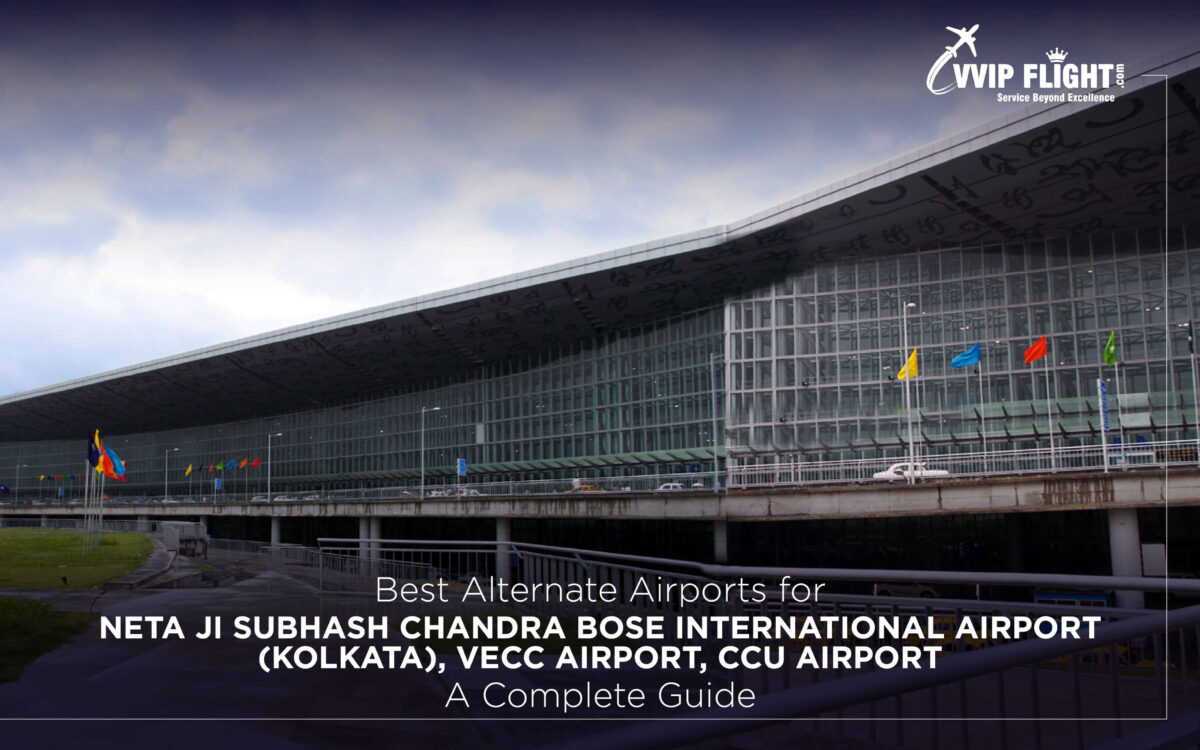
Best Alternate Airports for Neta Ji Subhash Chandra Bose International Airport (Kolkata), VECC Airport, CCU Airport – A Complete Guide

  1. Airport Name: BHUBANESHWAR INTERNATIONAL AIRPORT
  • ICAO Code: VEBS
  • IATA Code: BBI
  • City: BHUBANESHWAR
  • Distance in Nautical Miles: 206 NM
  • Operating hours of VEBS airport: H24
  • Restrictions if any: NIL AS ON DATE
  • AOE (Airport of Entry) –YES (International Airport)
  • Customs/ Immigration at VEBS airport: Available
  • Type of Airport: CIVIL
  • RFFS at VILK airport: CAT VII
  • Fuel availability: JET A1
  • Ground Handler at Bhubaneshwar International Airport: VVIP FLIGHT PRIVATE LIMITED (ops@vvipflight.com)

2. Airport Name: JAI PRAKASH NARAYAN AIRPORT

  • ICAO Code: VEPT
  • IATA Code: PAT
  • City: PATNA
  • Distance in Nautical Miles: 255 NM
  • Operating hours of VEPT airport: H24
  • Restrictions if any: NIL AS OF DATE
  • AOE (Airport of Entry) –NO
  • Customs/ Immigration at VEPT airport: NOT AVAILABLE
  • Type of Airport: CIVIL
  • RFFS of VEPT airport: CAT VII
  • Fuel availability: JET A1
  • Ground Handler at Patna airport: VVIP FLIGHT PRIVATE LIMITED (ops@vvipflight.com)

3. Airport Name: GAYA INTERNATIONAL AIRPORT

  • ICAO Code: VEGY
  • IATA Code: GAY
  • City: GAYA
  • Distance in Nautical Miles: 230 NM
  • Operating hours of VEGY airport: 0515 UTC – 1200 UTC
  • Restrictions if any: NIL AS OF DATE
  • AOE (Airport of Entry): Yes (International Airport)
  • Customs/ Immigration at VEGY airport: YES
  • Type of Airport: CIVIL
  • RFFS at VEGY airport: CAT VI
  • Fuel availability: JET A1
  • Ground Handler at Gaya International Airport: VVIP FLIGHT PRIVATE LIMITED (ops@vvipflight.com)

4. Airport Name: JAMSHEDHPUR AIRPORT

  • ICAO Code: VEJS
  • IATA Code: IXM
  • City: JAMSHEDPUR
  • Distance in Nautical Miles: 127 NM
  • Operating hours of VEJS airport: PN REQUIRED
  • Restrictions if any: NIL AS OF DATE
  • AOE (Airport of Entry): NO
  • Customs/ Immigration at VEJS airport: NOT AVAILABLE
  • Type of Airport: PRIVATE AIRFIELD
  • RFFS at VEJS airport: CAT IV
  • Fuel availability: JET A1
  • Ground Handler at JAMSHEDHPUR AIRPORT: VVIP FLIGHT PRIVATE LIMITED (ops@vvipflight.com)

5. Airport Name: RANCHI AIRPORT

  • ICAO Code: VERC
  • IATA Code: IXR
  • City: RANCHI
  • Distance in Nautical Miles: 177 NM
  • Operating hours of VERC airport: 0100 UTC – 1615 UTC
  • Restrictions if any: NIL AS OF DATE
  • AOE (Airport of Entry): NO
  • Customs/ Immigration at VERC airport: NOT AVAILABLE
  • Type of Airport: CIVIL
  • RFFS at VERC airport: CAT VII
  • Fuel availability: JET A1
  • Ground Handler at RANCHI AIRPORT: VVIP FLIGHT PRIVATE LIMITED (ops@vvipflight.com)
CategoriesBespoke Charter ServiceBusiness Aircraft OperationsGround Handling

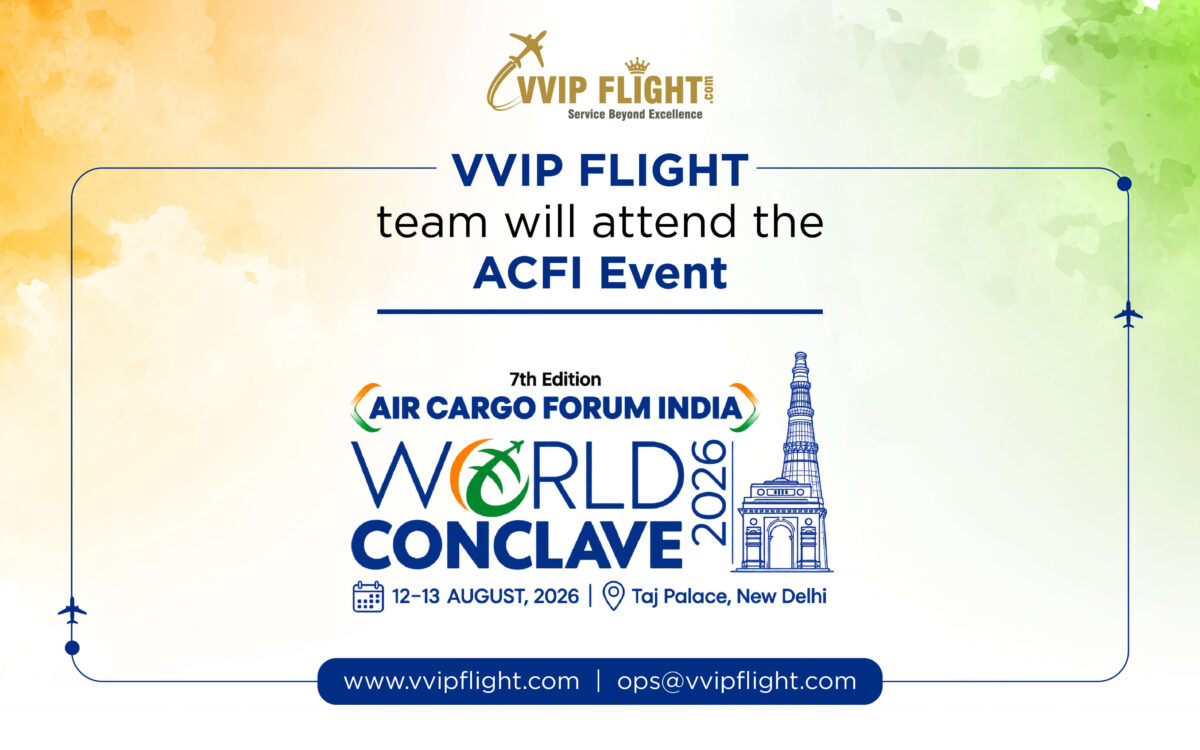
VVIP Flight at the ACFI World Conclave 2026, New Delhi

The 7th Edition of the Air Cargo Forum India World Conclave lands at one of the most iconic venues in the city, and VVIP Flight will be attending.

This year’s theme is ‘Reimagining Global Trade: India Pioneering Resilient Supply Chains.’ For an event that brings together airline executives, freight forwarders, cargo carriers, airport operators, logistics technology firms, and supply chain professionals under one roof, this theme accurately describes what is currently taking place on the ground in the Indian sub-continent.

What is the ACFI World Conclave 2026

ACFI, or Air Cargo Forum India, helps in the development of the leading Indian airports as gateways for air cargo operations. It facilitates trade facilitation in air cargo services and has worked tirelessly for several years to create a platform wherein the air cargo community, shippers, freight forwarders, airlines, and regulators, amongst others, meet to discuss matters relevant to their operations.

The 7th Edition of World Conclave shows just that. Previous editions have had names such as Cathay Cargo, FedEx, Etihad Cargo, Swissport, Adani Airports, and GMR Cargo as Conclave partners, in addition to a host of delegates from the commercial airlines, scheduled cargo services, cold chain operators, startups in logistics technology, and infrastructure providers.

The parallel roundtable discussions in 2026 are to be held on topics related to pharma, e-commerce, electronics, semiconductors, FMCG, perishables and telecom. Also part of the event are the ACFI Innovatopia Awards 2026, which will honour innovations in any of five areas, from customer experience to sustainability and digitalisation, for a cash reward of Rs 1,00,000 per category.

For registration or discussions, reach out to conclave@acfi.in

Why VVIP Flight Will Be There

First, GSA. VVIP Flight is looking to grow our General Sales Agent services for passenger and cargo airlines in India and South Asia. It should be said at an event such as this. Freight forwarders, cargo agents, airline commercial departments, and logistics firms make up a large part of the ACFI delegates, and the opportunity for a cargo GSA in India – one of the fastest growing air freight markets in the world – is one we would like to explore in person with experts in the field.

India’s air cargo market has been growing steadily. There has been a rise in cross-border e-commerce volumes. Pharmaceuticals are becoming a priority corridor, especially for cold chain distribution. Shipping electronics and semiconductors has grown along with manufacturing. The freight forwarding connections behind all of this are exactly what a cargo GSA needs to cultivate, and ACFI is where these connections are made.

Another reason is ground handling. For international air cargo operators and airlines interested in India as an option, the regulatory landscape and operations environment in India are unique. Obtaining landing permits, scheduling slots, dealing with airport authorities, liaising with customs and immigration, ground handling – there is a whole list of things that may look daunting for operators that never dealt with India. But for operators that have come to India once or twice, the advantage of having a ground handling partner who knows the DGCA, BCAS, AAI, and airport ground handling authorities well enough to spot potential trouble spots in advance will be a game-changer. This is the kind of conversation we would like to conduct during the conclave.

What We Offer

From India, Nepal, Bangladesh, Sri Lanka, Bhutan, and the Maldives, VVIP Flight manages:

  • Landing and overflight permits with documentation coordination and planning through all origin countries, including India’s restricted processing list.
  • Ground handling and ramp handling at major airports of the region, including FBO at VIDP, VABB, VAAH, VOCI, VOHS, and VOGA.
  • GSA services for passenger airlines, encompassing sales, travel trade and corporate development, agency management, BSP management, marketing, and regulatory affairs.
  • GSA services for cargo airlines, encompassing freight forwarder relationships, key account management, capacity management, charter cargo marketing, and specialist cargo such as pharmaceutical, perishable, hazardous, and project cargo.
  • VIP and diplomatic ground handling for Heads of State movements and VIP/private aircraft customers.
  • Trip support for charter airlines, business aviation flight departments, and cargo airlines.

A Note on the GSA Market Expansion

To select to announce this at ACFI World Conclave is a purposeful choice, not just timing convenience. The Indian market for cargo GSA services is poorly developed, compared to the potential. The capacity of foreign airlines to India is often unmatched by the commercial infrastructure required to actually utilize it effectively. Freight forwarder relationships are long-lasting and hard to establish and maintain. Key account management in India is possible only if you are there to do it.

This blend of commercial acumen and operations experience of aviation within six South Asian countries sets apart our GSA offer from any other sales house. It is the understanding of the entire ecosystem of the supply chain that enables us to be an airline’s commercial representative in an operations-based approach to the business.

The case with passenger airlines is not different. The knowledge of the Indian travel trade, the corporate accounts, the agencies, the BSP framework, and the regulatory framework surrounding airline sales needs an experienced local partner.

We will be at Taj Palace on August 12 and 13. In case you are attending the ACFI World Conclave 2026 and have something on GSA, ground handling, cargo, or aviation in South Asia, please do get in touch with us at ops@vvipflight.com prior to the event, and we will fix a time.

DISCLAIMER: Please take note that the above information may be subject to change without any further notice. It is advised to contact our operations team for the most recent regulations, updates, and information prior to your trip planning.

Frequently Asked Questions (FAQs)

  1. Why does VVIP Flight attend the ACFI World Conclave 2026? 

There are two reasons for that. First, VVIP Flight is developing its GSA services to passenger and cargo airlines in India and South Asia, and the ACFI delegate community, freight forwarders, cargo agents, and airline commercial division, is exactly the right place to discuss that. Ground handling services to India for international cargo and airline operators are another topic on the agenda.

  1. Which of the GSA services is offered by VVIP Flight to the cargo carriers? 

Freight forwarder relationship management, key account management, capacity optimization, charter cargo marketing, yield management assistance, and specialized cargo handling comprising pharma, perishables, hazardous cargo, and project cargo, in India and South Asia.

  1. Which of the GSA services is offered by VVIP Flight to the passenger airlines? 

Airline sales and development, sales to the travel trade and corporates, airline agencies management, BSP and travel agents’ assistance, route development and analysis, airline branding, and regulatory liaison in India.

  1. How can one get an appointment to meet with VVIP Flight at ACFI World Conclave 2026? 

Get in touch with our team at ops@vvipflight.com before the conclave. We shall arrange a meeting at a suitable time for you at Taj Palace, New Delhi.

CategoriesBusiness Aircraft OperationsGround Handling

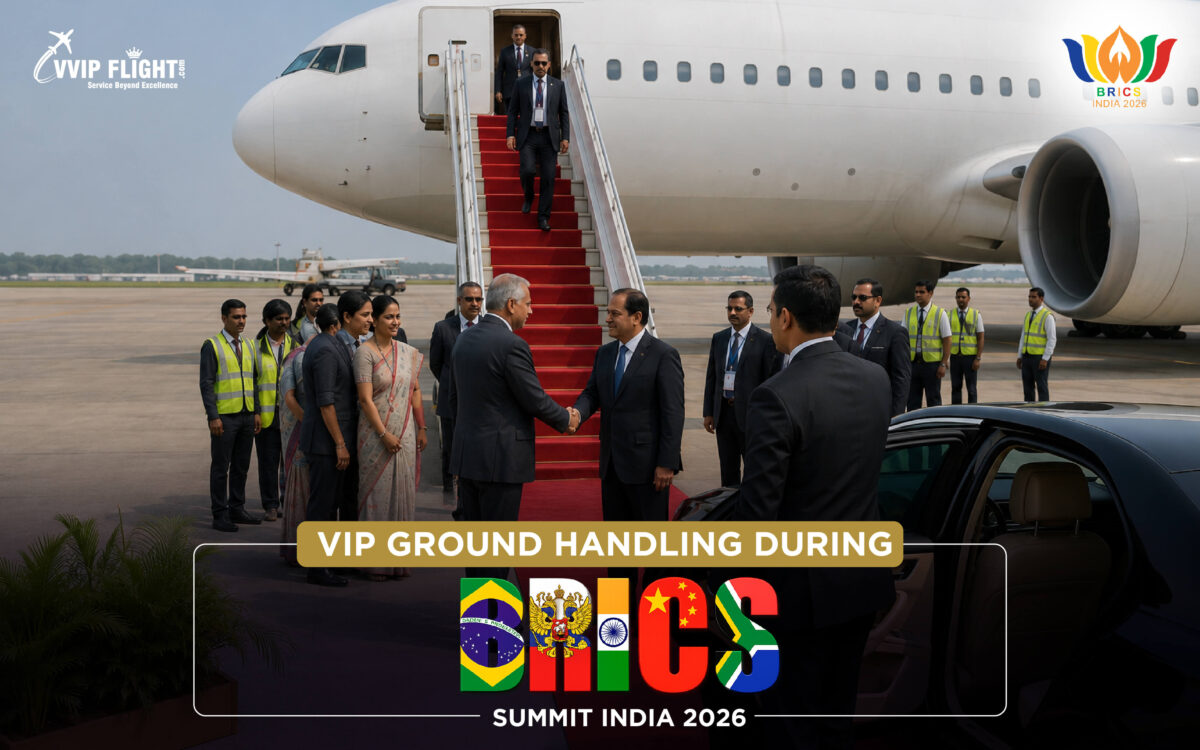
VIP Ground Handling During BRICS Summit India 2026

The 18th BRICS Summit takes place in New Delhi on September 12 and 13, 2026. As India chairs the grouping for the fourth time under the theme “Building for Resilience, Innovation, Cooperation and Sustainability,” the summit will bring together Heads of State and senior delegations from eleven member nations: Brazil, Russia, India, China, South Africa, Egypt, Ethiopia, Iran, the UAE, Indonesia, and Saudi Arabia as an observer. Partner country delegations and accompanying business and media contingents will add significantly to the total volume of international aircraft movements into Delhi around the event.

For aviation operators, embassies, and protocol teams managing delegation travel, the ground handling requirement for a summit of this scale is considerable. This article explains what VIP ground handling at a major diplomatic event involves and how VVIP Flight supports operations into New Delhi during the BRICS Summit period.

What VIP Ground Handling Means at a Summit Like BRICS

VIP ground handling for a diplomatic summit is not a scaled-up version of standard business aviation handling. It is a fundamentally different operational framework built around security, protocol, and precise timing, all of which are non-negotiable at a Head of State-level event.

At the BRICS Summit, every aircraft carrying a Head of State, a foreign minister, or a senior delegation member arrives into an operational environment where security agencies, protocol officers, airport authorities, and ground handlers are coordinating simultaneously. The ground handler’s role is to ensure that every element of the ground operation, from parking stand allocation and ramp access to lounge coordination and motorcade staging, is in place before the aircraft arrives, not managed on the day.

Ceremonial Lounge and Tarmac Access

Delhi’s Indira Gandhi International Airport has a dedicated Ceremonial Lounge for VVIP and diplomatic movements, coordinated separately from the main commercial terminal. For Head of State aircraft, movements into and out of the Palam Air Force technical area involve a separate coordination chain that runs through defense authorities alongside civil aviation and protocol channels.

For BRICS Summit delegations, lounge access needs to be arranged well in advance with a verified passenger and support staff list. Direct tarmac access, allowing the delegation to move from the aircraft to the lounge or waiting motorcade without passing through any public terminal area, is a standard requirement for principal-level movements and must be coordinated with both the airport authority and the relevant security agencies before the aircraft departs its origin.

Permit Coordination for BRICS Delegation Flights

Every non-scheduled foreign aircraft operating into India requires a valid landing permit from the DGCA. Standard processing is 3 working days, extends to 7 working days for flights originating from the list of restricted countries such as China, North Korea, Pakistan, Afghanistan, Iraq, Somalia, and Nigeria.

Beyond the standard permit, diplomatic and Head of State flights require clearance through the Ministry of External Affairs alongside the civil aviation permit process and, where applicable, defense coordination. This parallel clearance process has its own timeline, which does not compress simply because the event is significant. Delegations who have not initiated their coordination process at least one month before the planned arrival should do so immediately.

For aircraft transiting Indian airspace without landing, overflight permits are required. Standard overflight permits process in 1 working day, extends to 3 working days for restricted-origin countries.

Security Compliance During the Summit Period

India deploys enhanced security protocols around major diplomatic events. For the BRICS Summit, all passengers and crew arriving on international aircraft will be subject to standard Indian aviation security requirements, including personal frisking and hand baggage X-ray screening before entering the sterile pre-boarding area.

For delegations traveling with armed personal protection details, prior coordination with Indian customs and the Ministry of Home Affairs through the correct diplomatic channel is mandatory before arrival. E-cigarettes and satellite phones are prohibited in India and should not be carried by any passenger or crew member.

Motorcade and Ground Transportation Coordination

For principal-level movements, ground transportation is not arranged independently of the ramp operation. The motorcade staging, timing, and departure sequence from the airport to the summit venue needs to be aligned with the ramp schedule and the lounge timeline. A delegation that arrives at the aircraft door and finds the motorcade staging 20 minutes behind is experiencing a ground coordination failure, not a transportation problem.

At VVIP Flight, motorcade timing is coordinated as part of the integrated ground handling brief, not as a separate arrangement made by a different provider. This ensures that the vehicle movement and the aircraft movement run on the same timeline.

Slot and Parking Coordination During the Summit Period

Delhi airport manages general aviation slots separately from commercial operations. During the BRICS Summit period, available general aviation slots will be compressed as the airport sequences Head of State arrivals and departures across a narrow window. Operators who have not confirmed their arrival slots and parking stands well ahead of the event will face the realistic possibility of being assigned slots and stands significantly outside their preferred window.

Parking confirmation at VIDP operates on a first-come, first-served basis. Delegations planning extended stays in Delhi around the summit should confirm stand availability and planned duration with their ground handler at the earliest opportunity.

How VVIP Flight Provides VIP Ground Handling for BRICS 2026

At VVIP Flight, VIP ground handling for diplomatic and Head of State movements is managed as an integrated service. Our team coordinates the landing and overflight permit process, slot and parking confirmation, Ceremonial Lounge access, tarmac access, immigration and customs coordination, baggage handling, catering, and motorcade staging as a single operational plan with a single point of contact.

For delegations traveling to New Delhi for the BRICS Summit on September 12 and 13, we recommend beginning coordination now. Please contact our operations team at ops@vvipflight.com.

Disclaimer: Kindly note that the information provided in the above article is subject to change without prior notice. We recommend contacting our operations team for the latest regulations, updates, and accurate information before planning your trip.

Frequently Asked Questions (FAQs)

  1. What is VIP ground handling at the BRICS Summit?

VIP ground handling at a diplomatic summit covers Ceremonial Lounge access, tarmac coordination, permit management, security compliance, baggage handling, and motorcade staging, all coordinated in advance as a single integrated operation.

  1. Do BRICS delegation flights need special permits to land in India?

Yes. All non-scheduled foreign aircraft require a DGCA landing permit. Flights from the list of restricted countries such as China, North Korea, Pakistan, Afghanistan, Iraq, Somalia, Nigeria and China require 7 working days for processing. Diplomatic and Head of State flights also require Ministry of External Affairs clearance alongside the standard permit.

  1. Is the BRICS Summit venue confirmed?

The 18th BRICS Leaders’ Summit is scheduled in New Delhi on September 12 and 13, 2026. All major BRICS ministerial meetings in 2026 have been hosted at Bharat Mandapam. The official venue for the Leaders’ Summit has not been formally announced as of the time of writing.

  1. Can armed personal protection details travel to India with BRICS delegations?

Firearms carried by personal security personnel must be declared and cleared through the correct diplomatic channel and coordinated with Indian customs and the Ministry of Home Affairs before arrival.

  1. How far in advance should VIP ground handling for the BRICS Summit be arranged?

At least one month before the planned arrival date, and earlier for movements involving defense facilities or restricted-origin country permits. The permit and diplomatic clearance processes cannot be expedited after the fact.

CategoriesBusiness Aircraft OperationsGround Handling

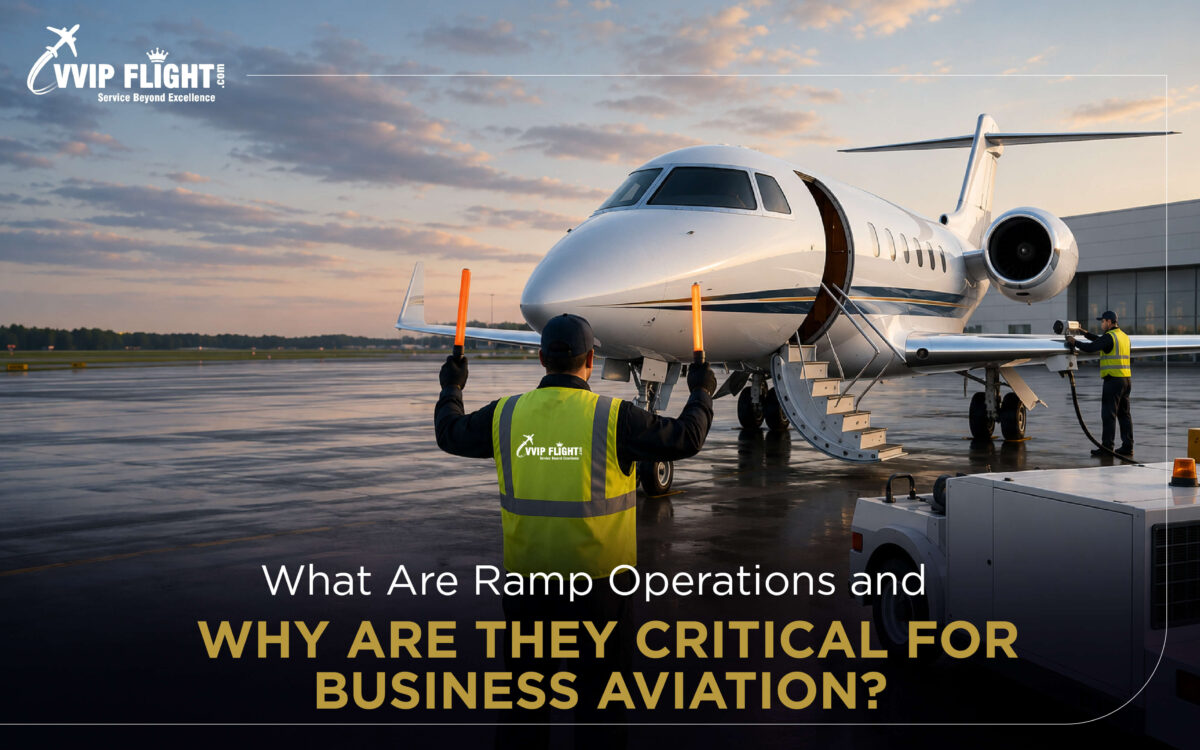
What Are Ramp Operations and Why Are They Critical for Business Aviation?

When a business aviation aircraft lands at an airport, the experience that follows for the passengers and crew depends almost entirely on what happens on the ramp. Most travelers see none of it. The marshaller who guides the aircraft into its parking stand, the ground power unit that keeps systems running while the engines are shut down, the fueling crew, the baggage handlers, the cabin cleaners, and the team coordinating the next departure slot are all working within a defined area and a defined sequence that few people outside the industry fully understand.

This article explains what ramp operations actually involve, why they require precise coordination, and why the quality of ramp handling is one of the most consequential variables in a business aviation operation.

Understanding Ramp Operations

The ramp, also referred to as the apron, is the paved surface area of an airport where aircraft are parked, loaded, unloaded, refueled, and serviced. It is a controlled zone, separate from the terminal building and the runway, with its own access restrictions, movement rules, and safety protocols. In business aviation, the ramp is where the operational handover between the flight crew and the ground team takes place, and it is where every service the aircraft needs before its next departure is delivered.

At airports with dedicated FBO infrastructure, the ramp is managed by the FBO and services are coordinated under a single operational framework. At airports without FBO facilities, the ramp is typically managed by the airport authority or a designated ground handler, and the coordination responsibility is distributed across several parties rather than held by a single operator.

What Ramp Operations Include

Ramp operations for a business aviation aircraft cover a wide range of services, many of which run simultaneously rather than in sequence. The core activities include aircraft marshalling and parking, chocks and cones placement for aircraft safety, connection of ground power units to maintain aircraft systems while the engines are shut down, fueling coordination, baggage loading and unloading, cabin cleaning, toilet and water servicing, catering loading, and aircraft pushback or towing when the parking stand does not allow a forward engine start.

Additional ramp services that apply depending on the operation include Air Starter Units for engine starting, Air Conditioning Units to maintain cabin temperature on the ground, and ramp-to-flight-deck communication to relay ATC instructions or operational information to the crew while they are inside the aircraft.

Each of these services requires specific equipment, a trained operator, and a defined position around the aircraft. When multiple services are running at the same time, which is standard during a turnaround, the ramp team must coordinate positions, sequencing, and timing to ensure that no service creates a hazard to another and that the aircraft is ready for departure within the planned ground time.

Why Ramp Safety is a Non-Negotiable Priority

The ramp is one of the highest-risk environments in aviation from a ground safety perspective. Aircraft are moving under their own power or being towed by vehicles. Ground service equipment is operating close to aircraft surfaces where any contact can cause structural damage. Fueling creates fire and static discharge risks that require specific safety protocols. Personnel are working in an environment where communication is often conducted over noise, through radio, and across language differences.

Every ramp operation follows a defined safety protocol that includes equipment positioning rules, minimum clearance distances between vehicles and aircraft, fuel safety procedures, and personnel movement restrictions within the active ramp area. A ramp team that operates without following these protocols creates not only a safety risk to the aircraft and personnel but also an operational liability that can ground the aircraft if damage occurs.

This is why ramp handling is not a commodity service. The difference between a ramp team that follows safety protocols precisely and one that does not is not visible in the invoice. It becomes visible when something goes wrong.

How Ramp Operations Affect Departure Timing

In business aviation, schedule precision matters more than in commercial aviation. A corporate principal with a board meeting, a diplomatic mission with a protocol schedule, or a charter group with an onward connection has no buffer for a departure delay caused by a ramp coordination failure.

The most common ramp-related causes of departure delay include fueling vehicles that were not positioned before the aircraft arrived, ground power units that were not connected promptly after engine shutdown, catering that was delivered to the wrong parking stand, baggage that was loaded in the wrong sequence relative to weight and balance requirements, and pushback vehicles that were not available when the crew was ready to start engines.

Each of these is a coordination failure rather than a service failure. The service itself, fueling, catering, baggage handling, is straightforward. The failure occurs in the sequencing and timing of that service relative to the aircraft’s ground schedule.

Ramp Coordination in India: Specific Considerations

At Indian airports, ramp operations for business aviation involve coordination with multiple agencies that do not always operate on the same communication channel. The handling agent, the fuel supplier, the airport authority’s ramp control, ATC, customs, and immigration may all have a role in a single aircraft movement, and the ground handler acts as the coordination hub between all of them.

At major airports including Delhi, Mumbai, Bengaluru, and Hyderabad, ramp access for business aviation aircraft is controlled and requires advance coordination with the airport authority. At smaller airports, ramp access may be less formally managed, but the coordination requirement with the local airport authority is no less important. Defense airports with civil enclaves add a further layer of coordination with defense ramp control, which operates separately from the civil aviation ramp management structure.

Mumbai presents a specific ramp constraint worth noting. The 72-hour parking limitation for general aviation aircraft means that ramp planning must account for the aircraft’s departure before that window expires, regardless of the operational requirement for a longer ground stop. Mumbai Airport enforces strict compliance with approved departure slots. Any delay beyond the allocated slot may result in financial penalties, as it can adversely impact the airport’s operational planning due to limited parking availability and heavy slot congestion.  

The Role of the Ground Handler in Ramp Coordination

For most business aviation operations in India, the ground handler is the single point of coordination for all ramp services. This means the handler is responsible for confirming the parking stand with the airport authority, sequencing the arrival of ground service equipment, briefing the ramp team on the aircraft type and specific service requirements, and communicating with the crew on ground progress and departure readiness.

An experienced ground handler with established relationships with the airport authority and local service providers is able to manage this coordination efficiently, anticipating problems before they arise and resolving them before they affect the departure schedule. A handler without that experience or those relationships creates a coordination gap that the crew or flight operations team is left to fill, usually under time pressure.

How VVIP Flight Manages Ramp Operations

At VVIP Flight, ramp coordination is managed as an integrated part of the ground handling service rather than as a set of separately arranged services. Our team coordinates airport slots, parking stand confirmation, ground service equipment scheduling, fueling, baggage handling, catering, and pushback as a single sequence aligned to the aircraft’s planned ground time. For operations at defense airports or airports with specific ramp access requirements, we manage the additional coordination with the relevant defense authorities as part of the same process.

For assistance with ramp handling at any airport across India, Nepal, Bhutan, Bangladesh, Sri Lanka, or the Maldives, please contact our operations team at ops@vvipflight.com

Disclaimer: Kindly note that the information provided in the above article is subject to change without prior notice. We recommend contacting our operations team for the latest regulations, updates, and accurate information before planning your trip.

Frequently Asked Questions (FAQs)

  1. What is the ramp in business aviation? 

The ramp, also called the apron, is the controlled paved area of an airport where aircraft are parked, refueled, loaded, and serviced between flights. It is separate from the terminal and runway and has its own access and safety protocols.

  1. What services are included in ramp operations for a business aviation aircraft? 

Core ramp services include aircraft marshalling, chocks and cones placement, ground power connection, fueling, baggage handling, cabin cleaning, toilet and water servicing, catering loading, and pushback or towing. Additional services include Ground power units, air starter units, air conditioning units, and ramp-to-flight-deck communication.

  1. Why is ramp safety particularly important in aviation? 

The ramp is a high-risk environment where aircraft, vehicles, and personnel operate in close proximity to the aircraft. Fueling creates fire and static discharge risks, and any contact between ground equipment and an aircraft surface can cause structural damage. Precise safety protocols govern every activity in this area.

  1. What are the most common ramp-related causes of departure delay? 

The most frequent causes include fueling vehicles not positioned before arrival, ground power not connected promptly, catering delivered to the wrong stand, baggage loaded in the wrong sequence, and pushback vehicles unavailable when the crew is ready to depart.

CategoriesBusiness Aircraft OperationsGround Handling

Top Ground Handling Companies for Business Aviation in India

The growth of business aviation in India has transformed the expectations around aircraft handling, passenger services, operational efficiency, and trip support. Today, corporate jet operators, private aircraft owners, diplomatic missions, and charter companies require more than basic airport assistance. They need experienced aviation partners capable of managing complex logistics, regulatory coordination, VIP passenger handling, aircraft fueling, parking approvals, and seamless turnaround support across multiple airports.

India’s aviation ecosystem is diverse and operationally demanding. Airports such as Delhi, Mumbai, Bengaluru, Hyderabad, and Chennai often experience heavy traffic, slot congestion, and strict regulatory procedures. In such an environment, choosing the right ground handling company becomes critical for smooth and efficient flight operations.

This guide explores the top ground handling companies for business aviation in India, what services they provide, and what operators should consider when selecting a reliable aviation support partner.

What Does a Ground Handling Company Do?

Ground handling companies provide operational support for aircraft and passengers before arrival, during turnaround, and before departure. In business aviation, these services are highly specialized and often customized for VVIP, diplomatic, corporate, cargo, and medevac operations.

Typical services include:

  • Aircraft parking coordination
  • Landing and overflight permits
  • Slots and PPR approvals
  • Ramp handling
  • Passenger and crew handling
  • Customs and immigration coordination
  • Aviation fuel arrangements
  • VIP lounge access
  • Aircraft security
  • Flight planning and dispatch
  • Crew transportation and hotel bookings
  • In-flight 5-star catering
  • Aircraft cleaning and servicing

Efficient ground handling reduces delays, improves operational safety, and ensures a premium passenger experience.

Why Ground Handling Matters in India

India presents unique operational challenges for foreign and domestic operators. Regulations can vary depending on airport category, defense requirements, customs procedures, and parking restrictions. Delays in permits or slots can impact entire flight schedules.

An experienced ground handling company helps operators navigate:

  • DGCA regulations
  • Airport Authority coordination
  • Military clearances
  • CIQ procedures
  • Slot restrictions
  • Fuel scheduling
  • Aircraft parking availability
  • VIP security protocols

For business aviation operators, local expertise is often the difference between smooth operations and costly delays.

Leading Ground Handling Companies in India

1. VVIP Flight

VVIP Flight is one of the leading business aviation support providers in India, offering comprehensive ground handling services for private jets, VVIP aircraft, diplomatic flights, cargo operators, medevac missions, and head-of-state operations. The company provides support across India along with neighboring South Asian regions, including Nepal, Bangladesh, Sri Lanka, Bhutan, and the Maldives. Their operational expertise includes:

  • VVIP ground handling
  • Landing and overflight permits
  • Slot and parking approvals
  • Aircraft fueling coordination
  • Customs and immigration handling
  • Flight dispatch support
  • Crew visa assistance
  • Executive transportation
  • Aircraft security
  • Inflight catering coordination

The company has built a strong reputation for handling complex aviation missions while maintaining high operational standards.

2. FBO Operators

FBO Operators is a global flight support and ground handling company that assists private jet operators, charter companies, corporate flight departments, and business aviation operators worldwide. The company provides a wide range of services, including flight planning, weather briefings, NOTAM analysis, overflight and landing permits, airport slots, parking approvals, aircraft fueling coordination, and ground handling support.

With a network spanning multiple international destinations, FBO Operators helps crews manage both pre-flight planning and on-ground operations through a single point of contact. Their ability to coordinate permits, operational requirements, and airport services makes them a recognized support partner for international business aviation missions.

3. AISATS

AISATS is a joint venture between Air India and SATS Ltd. The company provides airport ground handling and cargo services across major Indian airports. Their infrastructure and large operational footprint make them an important player in aviation handling services in India.

Although primarily commercial aviation focused, AISATS also supports select business aviation requirements at certain airports.

4. BizAv International

BizAv International is a recognized aviation support company serving business aviation operators with flight support, operational coordination, and handling services. The company supports private and corporate aviation movements and is known within the industry for assisting operators with flight planning and ground support requirements.

Its focus on business aviation operations makes it a familiar name among operators flying into the region.

5. Indothai

Indothai provides aviation support and handling services for a variety of aircraft operations. The company supports operators with ground handling coordination, flight support services, and operational assistance across multiple airports.

Its experience in business aviation and operational support has helped establish its presence within the aviation services sector.

Key Factors to Consider When Choosing a Ground Handling Company

1. Operational Experience

Business aviation operations often involve high-value aircraft, sensitive passengers, and time-critical missions. Operators should choose companies with proven experience in handling:

  • Private jets
  • Diplomatic flights
  • VVIP operations
  • Medevac aircraft
  • Cargo aircraft
  • International operators
  • Airport Network

India’s aviation infrastructure is spread across metropolitan and regional airports. Ground handlers with wider operational coverage offer better flexibility for multi-city operations.

2. Permit Expertise

Landing permits, overflight clearances, parking approvals, and military coordination are essential components of international flight operations in India. A company with strong regulatory expertise can significantly reduce operational risk.

3. 24/7 Operational Support

Aviation operates around the clock. Reliable trip support companies provide continuous operational monitoring and rapid response capabilities for last-minute changes.

4. Passenger Experience

Business aviation passengers expect discretion, efficiency, and premium services. VIP lounges, meet-and-assist services, secure transportation, and fast-track coordination all contribute to the overall experience.

5. Ground Handling Trends in India

India’s business aviation sector is evolving rapidly due to growth in corporate aviation, increasing private jet ownership, rising demand for charter services, expansion of airport infrastructure, and international business travel growth.

As a result, operators increasingly seek integrated aviation support partners capable of delivering multiple services under one umbrella. Companies that combine permits, fuel coordination, handling, transportation, and concierge services are becoming preferred partners for international operators.

6. Technology and Operational Efficiency

Modern ground handling companies now use technology-driven coordination systems for flight tracking, slot monitoring, dispatch coordination, fuel scheduling, and real-time operational updates. Digital coordination improves communication between airports, operators, crew members, and handling teams, minimizing delays and improving efficiency.

Why Operators Prefer Integrated Aviation Support

Many operators today prefer working with a single aviation support company rather than coordinating with multiple vendors. Integrated support improves communication efficiency, operational control, cost management, turnaround time, and passenger experience. Companies offering end-to-end aviation support can streamline operations significantly, especially during multi-airport missions.

Conclusion

India remains one of the fastest-growing business aviation markets in Asia. However, operating efficiently in the region requires experienced local support, regulatory expertise, and strong airport coordination. Choosing the right ground handling company can improve operational reliability, passenger satisfaction, turnaround efficiency, and regulatory compliance.

Among the leading providers, VVIP Flight continues to stand out for its extensive business aviation expertise, regional operational coverage, VVIP handling capabilities, and integrated aviation support services. From permits and parking approvals to fuel coordination and passenger handling, experienced aviation partners play a critical role in ensuring seamless flight operations across India

If you have any questions regarding the above article or require any assistance for your next trip to India, please feel free to contact our team at ops@vvipflight.com 

Disclaimer: Kindly note that the information provided in the above article is subject to change without prior notice. We recommend contacting our operations team for the latest regulations, updates, and accurate information before planning your trip. 

Quick Enquiry

Quick Enquiry
Close