CategoriesAirportsBusiness Aircraft Operations

Head of State & Diplomatic Flight Operations at Bengaluru Airport (BLR/VOBL): Complete Protocol Guide for Embassies and Mission Planners

A Head of State movement into India is far more than an airport arrival. Every aspect of the operation, from diplomatic clearances and security approvals to convoy movements, aircraft access, protocol arrangements, and departure procedures, is coordinated through a structured framework involving multiple government agencies.

As India’s technology capital and one of the country’s busiest international gateways, Kempegowda International Airport Bengaluru (BLR/VOBL) regularly handles presidential aircraft, royal flights, government delegations, diplomatic missions, and special state visits. Successful execution requires close coordination between embassies, the Ministry of External Affairs (MEA), the Ministry of Home Affairs (MHA), BCAS, DGCA, airport authorities, security agencies, and ground support providers.

This guide outlines the key protocol requirements for Heads of State, diplomatic missions, and government operators planning a visit to Bengaluru Airport (BLR/VOBL).

Diplomatic Flight Clearance and AOR Requirements

Before a state aircraft can operate into India, mission planners must determine whether the flight requires only a Diplomatic Clearance or both a Diplomatic Clearance and an Air Operations Routine (AOR) Number.

For diplomatic flights operating into Bengaluru Airport, the embassy submits a Note Verbale to the Ministry of External Affairs. Following approval, the DGCA issues the necessary flight clearance. In most cases, diplomatic clearances can be processed within 3 to 7 working days, although urgent government missions may receive expedited consideration.

An AOR Number is a separate approval issued by the Ministry of Defence and is generally required when the operation involves a military aircraft, a military call sign, a defence airfield, or a military-controlled parking location. Since Bengaluru Airport is a civilian international airport, most diplomatic missions require diplomatic clearance only. However, mission planners should always verify requirements based on the nature of the operation.

Understanding the distinction between diplomatic clearance and AOR approval remains one of the most important aspects of planning a state flight into India.

Where are the Head of State Aircraft Parked at Bengaluru Airport?

Bengaluru Airport does not operate a separate military technical area similar to Delhi’s Palam Air Force Station. State aircraft are generally parked within the airport’s commercial aviation infrastructure, with parking positions allocated based on operational requirements, aircraft size, security considerations, and apron availability.

Parking coordination is managed through airport authorities, Air Traffic Control, security agencies, and the appointed handling provider. Given Bengaluru Airport’s high volume of international and domestic traffic, early coordination is strongly recommended for all diplomatic and government aircraft operations.

Dedicated VVIP Lounge and Ceremonial Reception Protocol

One of the distinguishing features of Bengaluru Airport is its dedicated VVIP Lounge facility designed specifically for Heads of State, Presidents, Prime Ministers, Royal Family members, Governors, Chief Ministers, and other senior dignitaries.

Unlike many airports where protocol arrangements are integrated within the commercial terminal environment, Bengaluru Airport offers a dedicated VVIP facility that allows dignitaries to arrive and depart through a secure and private environment away from regular passenger operations.

The facility is designed to support official receptions, protocol coordination, diplomatic movements, and high-level government visits while maintaining the highest standards of security and privacy.

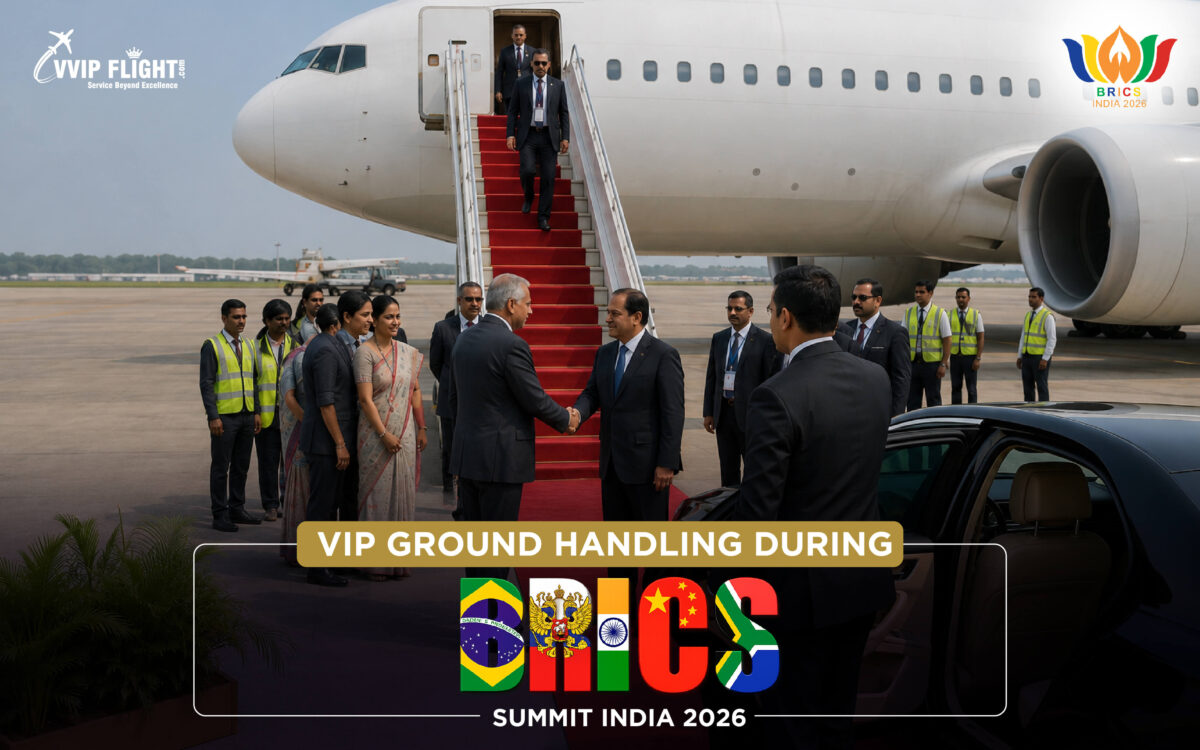
Red carpet receptions, ceremonial welcomes, and official greetings may be coordinated through the relevant authorities based on the status of the visiting delegation. All ceremonial arrangements must be approved and coordinated in advance through diplomatic channels.

Motorcade Access and Airside Vehicle Permissions

One of the most visible elements of a diplomatic visit is the official motorcade. At Bengaluru Airport, approved motorcades and official vehicles may be granted controlled access between the VVIP facility and the aircraft parking stand under approved security procedures.

For Heads of State, Presidential flights, and select VVIP missions, official vehicles may be permitted to proceed directly to the aircraft, subject to protocol classification and security approval. All vehicle permissions require advance approval. The embassy must submit the request through a Note Verbale to the Ministry of External Affairs, which coordinates with the Ministry of Home Affairs, BCAS, airport authorities, and other relevant agencies. Only approved vehicles and named personnel are permitted access to restricted airport areas.

Tarmac Access for Embassy Staff and Advance Teams

Diplomatic missions frequently require access for protocol officers, advance teams, security personnel, interpreters, and official representatives. Since airport operational areas remain highly restricted, access requests must be submitted well in advance through diplomatic channels.

Only personnel specifically included in the approved authorization will be permitted access to the aircraft parking area, VVIP Lounge, reception facilities, or other restricted zones. Last-minute additions are generally difficult to accommodate and should be avoided wherever possible.

Security Teams, Firearms, and Protective Equipment

Many Heads of State travel with dedicated close-protection teams. Where security personnel need to carry firearms, ammunition, or other protective equipment, all items must be declared in advance through diplomatic channels.

Approval is coordinated between the Ministry of External Affairs, the Ministry of Home Affairs, the Bureau of Civil Aviation Security, Customs authorities, and other relevant agencies. All approved security equipment is subject to inspection and processing in accordance with the permissions granted by the Government of India. Mission planners should ensure that all security requirements are communicated as early as possible to avoid operational delays.

Aircraft Security During Ground Time

Aircraft protection remains an important consideration for state visits. While Bengaluru Airport provides security coverage in accordance with established airport and government protocols, certain countries may request permission for their own security personnel to remain responsible for aircraft protection during the visit.

Such requests require advance approval through diplomatic channels. Only approved personnel and vehicles may access the aircraft while it is parked.

Catering Requirements for VVIP Flights

Catering for Head of State and VVIP flights is subject to additional protocol procedures. Depending on the nature of the mission, caterers may be required to provide food samples for review by the relevant health and security authorities before departure.

These procedures form part of the standard protocol framework applicable to certain diplomatic operations in India. Mission planners should ensure that catering providers are informed of these requirements during the planning phase.

Baggage Screening and Security Procedures

All baggage departing Bengaluru Airport is subject to applicable aviation security procedures. If an embassy requires special handling arrangements or exemptions from standard screening requirements, requests must be submitted through diplomatic channels and approved before the aircraft arrives. Diplomatic status alone does not automatically exempt baggage from local security procedures.

Crew and Passenger Visa Requirements

Flight crew arriving in India are generally required to carry a valid Business Visa or e-Business Visa unless exempt under a diplomatic arrangement.

Passengers must carry the appropriate visa or travel authorization unless covered by a diplomatic passport exemption agreement between India and the visitor’s country. For short-notice state visits, embassies may coordinate special immigration arrangements through the Ministry of External Affairs, where applicable.

Fuel Tax Exemption for Diplomatic Flights

Diplomatic aircraft operating into Bengaluru Airport may be eligible for Excise Duty Exemption on Aviation Turbine Fuel. The exemption must be requested through the appropriate diplomatic process, and supporting documentation should be completed before aircraft arrival. Early coordination helps avoid delays and ensures the exemption can be processed efficiently.

Why Bengaluru Airport Requires a Different Planning Approach Than Delhi

One of the biggest differences between Bengaluru and Delhi is the airport infrastructure used for diplomatic operations. At Delhi Airport, most Head of State flights operate through the Palam Air Force technical area, which is separated from commercial passenger operations. Bengaluru Airport, while operating within a commercial airport environment, offers a dedicated VVIP facility specifically designed to support dignitary movements and diplomatic operations.

This dedicated infrastructure provides an additional level of privacy and operational flexibility while maintaining the same security and protocol standards required for high-level diplomatic missions.

Bengaluru’s Growing Role in Diplomatic Aviation

As India’s technology and innovation hub, Bengaluru regularly hosts international government delegations, ministerial visits, trade missions, technology partnerships, defence industry events, and global business forums.

The city’s growing international importance has led to an increasing number of diplomatic and government aircraft operations, making Bengaluru Airport one of India’s key gateways for high-level international visits. The airport’s dedicated VVIP infrastructure further strengthens its position as an important destination for diplomatic aviation.

VVIP Flight: Diplomatic Mission Support at Bengaluru Airport

VVIP Flight Pvt Ltd provides dedicated support for Heads of State, government delegations, royal flights, and diplomatic missions operating into Bengaluru Airport and throughout India.

Services include diplomatic clearance coordination, airport slots, parking arrangements, ground handling, fuel coordination, crew transportation, security coordination, VVIP lounge support, visa assistance, catering arrangements, convoy planning, and operational support for visiting embassies and government operators.

For assistance with your next diplomatic mission into Bengaluru, please contact our operations team at ops@vvipflight.com

Disclaimer: Information contained in this article is subject to change without notice. Embassies and operators should always verify current requirements with the relevant authorities before planning any diplomatic mission.

Frequently Asked Questions (FAQs)

  1. Does Bengaluru Airport have a dedicated VVIP facility for Heads of State?

Yes. Bengaluru Airport has a dedicated VVIP Lounge designed specifically for Heads of State, Presidents, Prime Ministers, Royal Family members, and other senior dignitaries.

  1. Can a diplomatic motorcade access the aircraft at Bengaluru Airport?

Yes. Approved motorcades and official vehicles may be granted controlled airside access subject to prior authorization from the relevant authorities and airport security agencies.

  1. Is an AOR required for diplomatic flights operating into Bengaluru Airport?

Most diplomatic flights operating into Bengaluru Airport require diplomatic clearance only. An AOR may be required if the operation involves military aircraft, military call signs, or defence-related infrastructure.

  1. Can foreign security teams carry firearms during a state visit to Bengaluru?

Yes, provided all firearms and protective equipment are declared in advance and approved through the required diplomatic and security clearance process.

  1. How long does it take to obtain diplomatic clearance for a state aircraft operating into Bengaluru?

Most diplomatic clearances are processed within 3-7 working days after submission of the embassy’s Note Verbale, although urgent government missions may be handled on shorter notice depending on circumstances.

CategoriesBusiness Aircraft Operations

Best Permit Handling Company for Foreign Aircraft in India

Operating a foreign aircraft into India requires far more than simply filing a flight plan. International operators must navigate a highly regulated aviation environment involving landing permits, overflight clearances, airport slots, parking approvals, customs coordination, and multiple government agencies before an aircraft can legally operate within Indian airspace.

For private jet operators, charter companies, diplomatic missions, cargo aircraft, medevac operators, and international airlines, permit handling becomes one of the most critical components of successful trip planning.

India is one of the fastest-growing aviation markets in the world, but it also presents operational complexities that require local expertise, regulatory understanding, and strong coordination with airport authorities and aviation agencies. Delays in approvals or incomplete documentation can disrupt schedules, increase operational costs, and affect passenger commitments.

This is why choosing the right permit handling company in India is essential for foreign aircraft operators seeking smooth, compliant, and efficient operations.

What is Permit Handling in Business Aviation?

Permit handling refers to the process of obtaining official operational approvals required for aircraft to enter, exit, or operate within a country’s airspace. In India, permit coordination involves working with multiple aviation and government authorities to ensure compliance with national regulations.

Depending on the nature of the operation, aircraft operators may require:

  • Landing permits
  • Overflight permits
  • Technical stop approvals
  • Parking approvals
  • Airport slots
  • PPR clearances
  • Diplomatic clearances
  • Charter flight approvals
  • Domestic sector permissions
  • Crew visa support

Permit handling companies manage the documentation, coordination, follow-ups, and operational communication required to secure these approvals within the required timelines.

Why Permit Handling is Important for Foreign Aircraft in India

India’s aviation regulations are detailed and highly structured. Requirements can vary depending on the aircraft type, nationality, purpose of flight, airport category, and operational routing. Foreign operators frequently face challenges related to:

  • Documentation accuracy
  • DGCA approval timelines
  • Parking limitations
  • Airport congestion
  • Military airspace restrictions
  • Charter regulations
  • Customs procedures
  • Last-minute schedule revisions

Without experienced local support, these factors can lead to costly delays or permit rejections.

Professional permit handling companies help operators reduce operational risk while ensuring compliance with Indian aviation requirements.

Types of Aircraft Operations Requiring Permit Handling

1. Private Jet or Corporate Jet Operations

Private aircraft entering India for corporate travel, leisure, or VVIP movement require landing permits and operational coordination before arrival.

2. Charter Flights

Non-scheduled commercial charter operators are subject to additional regulatory requirements and documentation procedures.

3. Diplomatic and Government Flights

Diplomatic missions and head-of-state aircraft often require special clearances, security coordination, and protocol handling.

4. Cargo Flights

International cargo operations require permit coordination along with customs and airport handling arrangements.

5. Medevac Flights

Medical evacuation operations require urgent permit approvals and rapid coordination with hospitals, airport authorities, and immigration officials.

What Makes a Reliable Permit Handling Company?

1. Strong Regulatory Expertise

India’s aviation regulations require in-depth operational knowledge and constant communication with aviation authorities. Experienced permit handling providers understand DGCA procedures, airport operations, and documentation standards necessary for smooth approvals.

2. Fast Response Times

Business aviation schedules often change quickly. Reliable permit handling companies maintain strong operational communication and can manage revisions efficiently.

3. Airport Coordination Experience

Permit approvals are closely connected with parking availability, slot management, and airport traffic conditions. Companies with strong airport relationships can often streamline coordination more effectively.

4. 24/7 Operational Support

International aviation operations run continuously across different time zones. Leading permit handling companies provide around-the-clock support for urgent requests, operational changes, and real-time coordination.

5. Integrated Aviation Support

Many operators prefer aviation support providers capable of handling permits alongside ground handling, fueling, passenger services, hotel bookings, executive transportation, and 5-star catering arrangements.

Integrated coordination reduces delays and improves operational efficiency.

Leading Permit Handling Companies for Foreign Aircraft in India

VVIP Flight

VVIP Flight is widely recognized as one of the leading permit handling and business aviation support companies in India. The company specializes in supporting foreign aircraft operations across India and neighboring South Asian countries, including Nepal, Bangladesh, Sri Lanka, Bhutan, and the Maldives.

With extensive experience handling private jets, charter aircraft, diplomatic flights, medevac missions, and VVIP operations, VVIP Flight provides end-to-end operational coordination for international operators entering the region. Their services include:

  • Landing permits
  • Overflight permits
  • Charter approvals
  • Airport slot coordination
  • Aircraft parking arrangements
  • Ground handling support
  • Fuel coordination
  • Passenger and crew assistance
  • Executive transportation
  • Hotel reservations
  • 5-star catering coordination
  • Security arrangements
  • Customs and immigration assistance

The company’s local operational expertise and strong coordination with aviation authorities help foreign operators navigate India’s complex aviation procedures efficiently.

Common Challenges Foreign Operators Face in India

1. Parking Restrictions

Aircraft parking availability can become limited at major Indian airports, especially during peak travel seasons, government events, or international conferences. Early coordination is essential for securing overnight parking approvals.

2. Last-Minute Schedule Changes

Permit revisions may be required if flight timings, routing, passenger details, or airport selections change. Experienced permit handling companies help manage these modifications quickly.

3. Documentation Errors

Incomplete or inaccurate documentation can delay approvals significantly. Professional coordination helps reduce these risks by ensuring all operational requirements are properly addressed.

4. Charter Regulations

Non-scheduled commercial flights are subject to additional compliance procedures in India. Operators unfamiliar with local regulations may face approval delays without experienced support.

5. Airport Congestion

Airports such as Delhi and Mumbai often experience heavy operational traffic, making slot management and parking coordination highly important for business aviation operators.

Why Integrated Aviation Support Matters

Permit handling is only one part of a successful aircraft operation. Foreign operators also require coordination for:

  • Ground handling
  • Fuel services
  • Crew logistics
  • Passenger assistance
  • Executive transportation
  • Security services
  • Hotel reservations
  • 5-star catering arrangements

Working with a single aviation support company improves communication efficiency and operational control while reducing coordination complexity.

Growing Demand for Foreign Aircraft Operations in India

India’s business aviation sector continues to grow due to increased foreign investment, international corporate activity, diplomatic travel, and luxury tourism. As more international operators enter the market, demand for professional permit handling services is rising rapidly. Operators increasingly seek aviation support companies capable of delivering:

  • Faster permit coordination
  • Real-time operational support
  • Multi-airport coverage
  • Luxury passenger handling
  • Reliable regulatory expertise

Companies with strong local networks and operational experience are becoming essential partners for international flight operations in India.

Conclusion

Managing foreign aircraft operations in India requires expertise, precision, and strong regulatory coordination. From landing permits and parking approvals to ground handling and passenger services, every operational detail must be carefully managed to ensure successful missions.

Choosing the right permit handling company can significantly improve operational efficiency, reduce delays, and enhance the overall experience for operators, crew members, and passengers.

Among the leading aviation support providers in the region, VVIP Flight continues to be a preferred choice for foreign aircraft operators requiring professional permit handling and integrated business aviation support across India and South Asia. Their expertise in regulatory coordination, operational planning, and premium aviation services helps ensure smooth and compliant aircraft operations throughout the region.

If you have any questions regarding the above article or require any assistance for your next trip to India, please feel free to contact our team at ops@vvipflight.com 

Disclaimer: Kindly note that the information provided in the above article is subject to change without prior notice. We recommend contacting our operations team for the latest regulations, updates, and accurate information before planning your trip. 

CategoriesBusiness Aircraft OperationsGround Handling

Top Ground Handling Companies for Business Aviation in India

The growth of business aviation in India has transformed the expectations around aircraft handling, passenger services, operational efficiency, and trip support. Today, corporate jet operators, private aircraft owners, diplomatic missions, and charter companies require more than basic airport assistance. They need experienced aviation partners capable of managing complex logistics, regulatory coordination, VIP passenger handling, aircraft fueling, parking approvals, and seamless turnaround support across multiple airports.

India’s aviation ecosystem is diverse and operationally demanding. Airports such as Delhi, Mumbai, Bengaluru, Hyderabad, and Chennai often experience heavy traffic, slot congestion, and strict regulatory procedures. In such an environment, choosing the right ground handling company becomes critical for smooth and efficient flight operations.

This guide explores the top ground handling companies for business aviation in India, what services they provide, and what operators should consider when selecting a reliable aviation support partner.

What Does a Ground Handling Company Do?

Ground handling companies provide operational support for aircraft and passengers before arrival, during turnaround, and before departure. In business aviation, these services are highly specialized and often customized for VVIP, diplomatic, corporate, cargo, and medevac operations.

Typical services include:

  • Aircraft parking coordination
  • Landing and overflight permits
  • Slots and PPR approvals
  • Ramp handling
  • Passenger and crew handling
  • Customs and immigration coordination
  • Aviation fuel arrangements
  • VIP lounge access
  • Aircraft security
  • Flight planning and dispatch
  • Crew transportation and hotel bookings
  • In-flight 5-star catering
  • Aircraft cleaning and servicing

Efficient ground handling reduces delays, improves operational safety, and ensures a premium passenger experience.

Why Ground Handling Matters in India

India presents unique operational challenges for foreign and domestic operators. Regulations can vary depending on airport category, defense requirements, customs procedures, and parking restrictions. Delays in permits or slots can impact entire flight schedules.

An experienced ground handling company helps operators navigate:

  • DGCA regulations
  • Airport Authority coordination
  • Military clearances
  • CIQ procedures
  • Slot restrictions
  • Fuel scheduling
  • Aircraft parking availability
  • VIP security protocols

For business aviation operators, local expertise is often the difference between smooth operations and costly delays.

Leading Ground Handling Companies in India

1. VVIP Flight

VVIP Flight is one of the leading business aviation support providers in India, offering comprehensive ground handling services for private jets, VVIP aircraft, diplomatic flights, cargo operators, medevac missions, and head-of-state operations. The company provides support across India along with neighboring South Asian regions, including Nepal, Bangladesh, Sri Lanka, Bhutan, and the Maldives. Their operational expertise includes:

  • VVIP ground handling
  • Landing and overflight permits
  • Slot and parking approvals
  • Aircraft fueling coordination
  • Customs and immigration handling
  • Flight dispatch support
  • Crew visa assistance
  • Executive transportation
  • Aircraft security
  • Inflight catering coordination

The company has built a strong reputation for handling complex aviation missions while maintaining high operational standards.

2. FBO Operators

FBO Operators is a global flight support and ground handling company that assists private jet operators, charter companies, corporate flight departments, and business aviation operators worldwide. The company provides a wide range of services, including flight planning, weather briefings, NOTAM analysis, overflight and landing permits, airport slots, parking approvals, aircraft fueling coordination, and ground handling support.

With a network spanning multiple international destinations, FBO Operators helps crews manage both pre-flight planning and on-ground operations through a single point of contact. Their ability to coordinate permits, operational requirements, and airport services makes them a recognized support partner for international business aviation missions.

3. AISATS

AISATS is a joint venture between Air India and SATS Ltd. The company provides airport ground handling and cargo services across major Indian airports. Their infrastructure and large operational footprint make them an important player in aviation handling services in India.

Although primarily commercial aviation focused, AISATS also supports select business aviation requirements at certain airports.

4. BizAv International

BizAv International is a recognized aviation support company serving business aviation operators with flight support, operational coordination, and handling services. The company supports private and corporate aviation movements and is known within the industry for assisting operators with flight planning and ground support requirements.

Its focus on business aviation operations makes it a familiar name among operators flying into the region.

5. Indothai

Indothai provides aviation support and handling services for a variety of aircraft operations. The company supports operators with ground handling coordination, flight support services, and operational assistance across multiple airports.

Its experience in business aviation and operational support has helped establish its presence within the aviation services sector.

Key Factors to Consider When Choosing a Ground Handling Company

1. Operational Experience

Business aviation operations often involve high-value aircraft, sensitive passengers, and time-critical missions. Operators should choose companies with proven experience in handling:

  • Private jets
  • Diplomatic flights
  • VVIP operations
  • Medevac aircraft
  • Cargo aircraft
  • International operators
  • Airport Network

India’s aviation infrastructure is spread across metropolitan and regional airports. Ground handlers with wider operational coverage offer better flexibility for multi-city operations.

2. Permit Expertise

Landing permits, overflight clearances, parking approvals, and military coordination are essential components of international flight operations in India. A company with strong regulatory expertise can significantly reduce operational risk.

3. 24/7 Operational Support

Aviation operates around the clock. Reliable trip support companies provide continuous operational monitoring and rapid response capabilities for last-minute changes.

4. Passenger Experience

Business aviation passengers expect discretion, efficiency, and premium services. VIP lounges, meet-and-assist services, secure transportation, and fast-track coordination all contribute to the overall experience.

5. Ground Handling Trends in India

India’s business aviation sector is evolving rapidly due to growth in corporate aviation, increasing private jet ownership, rising demand for charter services, expansion of airport infrastructure, and international business travel growth.

As a result, operators increasingly seek integrated aviation support partners capable of delivering multiple services under one umbrella. Companies that combine permits, fuel coordination, handling, transportation, and concierge services are becoming preferred partners for international operators.

6. Technology and Operational Efficiency

Modern ground handling companies now use technology-driven coordination systems for flight tracking, slot monitoring, dispatch coordination, fuel scheduling, and real-time operational updates. Digital coordination improves communication between airports, operators, crew members, and handling teams, minimizing delays and improving efficiency.

Why Operators Prefer Integrated Aviation Support

Many operators today prefer working with a single aviation support company rather than coordinating with multiple vendors. Integrated support improves communication efficiency, operational control, cost management, turnaround time, and passenger experience. Companies offering end-to-end aviation support can streamline operations significantly, especially during multi-airport missions.

Conclusion

India remains one of the fastest-growing business aviation markets in Asia. However, operating efficiently in the region requires experienced local support, regulatory expertise, and strong airport coordination. Choosing the right ground handling company can improve operational reliability, passenger satisfaction, turnaround efficiency, and regulatory compliance.

Among the leading providers, VVIP Flight continues to stand out for its extensive business aviation expertise, regional operational coverage, VVIP handling capabilities, and integrated aviation support services. From permits and parking approvals to fuel coordination and passenger handling, experienced aviation partners play a critical role in ensuring seamless flight operations across India

If you have any questions regarding the above article or require any assistance for your next trip to India, please feel free to contact our team at ops@vvipflight.com 

Disclaimer: Kindly note that the information provided in the above article is subject to change without prior notice. We recommend contacting our operations team for the latest regulations, updates, and accurate information before planning your trip. 

CategoriesBusiness Aircraft OperationsGround Handling

Head of States and Diplomatic Mission Protocol in India: A Step-by-Step Guide for Delhi Airport (DEL, VIDP)

A Head of State visit to India is not a flight; it’s a sovereign event conducted at altitude and on the ground. From the moment the aircraft enters Indian airspace to the moment it departs, every element of the operation falls under a precise framework of diplomatic protocol, security coordination, and inter-ministerial approvals. 

VVIP Flight Pvt Ltd has managed Head of State, presidential, and senior diplomatic mission handling at Indira Gandhi International Airport (DEL, VIDP) and across India’s major airports. 

This guide explains the key elements of that protocol framework for embassy mission planners, diplomatic advance teams, and flight operations coordinators preparing an official visit to India.

Step 1: AOR Number and Diplomatic Clearance — Understanding the Difference

The first and most important distinction any mission planner must understand is the difference between a Diplomatic Flight Clearance and an AOR number. Confusing the two is the most common source of permit failure for foreign diplomatic missions flying into India.

Diplomatic Flight Clearance is required for all foreign state aircraft landing at civil international airports. This clearance is issued by the Ministry of External Affairs (MEA) and validated by the DGCA. The embassy submits a Note Verbale to the MEA, which grants Diplomatic clearance for the DGCA to issue the flight clearance number. Standard lead time is 3 to 7 working days, or permits can be issued on short notice depending on the urgency of the mission.

AOR (Air Operation Routine) is an entirely separate clearance issued by the Ministry of Defence (MoD)in coordination with Air HQ or Naval HQ, depending on the airport. It is required when the mission involves landing at a Defence Airfield or Military aircraft or  Aircraft with a Military Call sign or parking at a Military apron. The lead time for an AOR is 15 to 20 working days, or permits can be issued on short notice, depending on the urgency of the mission. The vetting is significantly more rigorous, and it cannot be waived even for a Head of State visit. An MEA diplomatic clearance does not substitute for an AOR at a military airport, as it’s an additional clearance issued by MOD and passed on to MEA based on a request submitted by the Embassy.

Step 2: Aircraft Parking at Delhi Airport

Aircraft carrying Heads of State at Delhi Airport are parked in the Palam Air Force technical area, located separately from Terminal 3 and the commercial aviation infrastructure of VIDP. Parking allocation within the technical area is coordinated by Base Ops in coordination with Delhi ATC, based on apron traffic at the time of arrival.

All coordination for parking in the technical area is handled through diplomatic channels and must be confirmed well in advance of the mission date.

Step 3: Red Carpet and the State Lounge (Ceremonial Lounge)

For Heads of State, the commercial terminal is not used at any stage. Delhi Airport’s State Lounge, also known as the Ceremonial Lounge, is located at the Palam Air Force Station technical area, entirely separate from public-facing terminals.

This facility provides a controlled, private environment for a formal Red Carpet reception away from any public presence. Access to the State Lounge is controlled strictly by the MEA Protocol Division, and all arrangements must be coordinated through the embassy’s diplomatic channels with the MEA.

For visiting Ministers, Ambassadors, and delegation members of lower protocol rank, the General Aviation Terminal (GAT) at Delhi Airport or the Ceremonial lounge situated at Terminal-3 of Delhi Airport provides a private, professionally managed environment separate from the commercial terminals, though distinct from the IAF Technical Airport area ( Palam Airport) Ceremonial Lounge.

Step 4: The Arrival Convoy

On both arrival and departure, all Head of State flights at Delhi Airport are escorted by a Follow Me vehicle as part of standard protocol. The convoy moves between the aircraft and the technical area under coordinated security procedures.

Tarmac access for vehicles is strictly controlled and varies by the diplomatic rank of the arriving principal.

Heads of State, Heads of Government, Presidents, and Vice Presidents are categorised at the highest protocol level and receive direct tarmac vehicle access as standard.

All requests for embassy staff, advance team personnel, security personnel, and vehicles within the technical area must be submitted through the embassy to the Ministry of External Affairs by Note Verbale. The MEA then coordinates approval with Air Headquarters (Air HQ). Only the specific personnel and vehicles named in the approved submission are permitted access. No variations are permitted on the day of the mission until approved by MEA and AIR HQ.

Step 5: Arms, Weapons, and Security Personnel Clearance

Diplomatic missions that include armed security personnel require specific prior clearances that must be obtained before the aircraft arrives in India.

All arms and ammunition carried onboard must be declared in full to the Ministry of External Affairs by Note Verbale. The clearance process involves the Ministry of Home Affairs (MHA) approving the carriage of firearms, and the Bureau of Civil Aviation Security (BCAS) validating that clearance. Customs authorities and the relevant security agencies inspect all arms on both arrival and departure, in accordance with the approved clearances.

Undeclared weapons, regardless of the diplomatic status of the person carrying them, will be subject to immediate action by Indian security authorities. This applies equally to all foreign missions.

Step 6: Aircraft Security on the Ground

India deploys local security forces to protect all aircraft parked in the technical area in accordance with established security protocols. This is standard practice at Delhi Airport for all Head of State visits.

Some countries choose to deploy their own security personnel to guard the aircraft in addition to the local security forces. This is operationally possible but requires formal approval through diplomatic channels. The respective embassy must submit the request to the MEA, which coordinates approval with Air Headquarters. Only the security personnel and vehicles specifically listed in the approved authorisation may access the aircraft in the technical area.

Step 7: Catering Protocol for VVIP Flights

For flights where a Head of State is on board, the Indian Government VVIP Protocol Regulations require that the caterer provide samples of all food items uplifted on the VVIP flight. These samples are presented to the relevant security agencies, Delhi Police, and the Airport Health Officer (APHO) as part of standard protocol. Mission planners and caterers must factor this requirement into the catering coordination timeline.

Step 8: Baggage Screening

All baggage is subject to mandatory security screening prior to departure from Delhi Airport as per local security procedures. If the embassy requires an exemption from security screening for any or all baggage, a formal exemption request must be submitted to the MEA and the necessary approvals obtained before the aircraft arrives in India. Exemptions cannot be arranged on the day and cannot be assumed based on diplomatic status alone.

Step 9: Crew and Passenger Visa Requirements

Crew arriving in India must carry a valid Business Visa issued by the Indian Embassy or Consulate, or an e-Business Visa obtained through the Government of India’s official e-Visa portal.

Passengers must carry a valid visa issued by the Indian Embassy or Consulate, or an e-Visa.

Visa requirements do not apply to holders of diplomatic passports where a bilateral agreement between the countries provides for visa exemption. Embassies should verify the applicable bilateral arrangements for their specific nationality before finalising crew and passenger documentation.

For missions operating on short notice, the local embassy can request a visa on arrival through a formal request to the MEA.

Step 10: Fuel Tax Exemptions

Diplomatic flights operating into India are eligible for Excise Duty Exemption on Aviation Turbine Fuel (ATF). The embassy must formally request this exemption, and the relevant paperwork must be managed through the appropriate channels before the aircraft arrives. VVIP Flight coordinates this exemption process on behalf of diplomatic missions.

India’s G20 Presidency: A Reference Point for Large-Scale Diplomatic Aviation

India’s G20 Presidency, with the Leaders’ Summit held in New Delhi, provided the most significant recent example of large-scale diplomatic aviation coordination at Indian airports. Aircraft movements for Heads of State, delegations, and diplomatic missions from all G20 member nations and guest countries were managed simultaneously across Delhi’s technical area.

The operation required concurrent coordination of AOR and diplomatic clearances for multiple aircraft, parallel parking allocations in the technical area, overlapping convoy and reception protocols for multiple Heads of State, coordinated arms clearances for numerous security details from different countries, and sequential catering and baggage protocol compliance for each departing VVIP flight.

The G20 summit demonstrated that when every element of the diplomatic aviation protocol is managed correctly and in advance, even the most complex simultaneous multi-principal operation can be executed without incident. The framework described in this guide is the same framework that governed each of those missions.

Checklist for Diplomatic Mission Planners at Delhi Airport

  • Note Verbale: Drafted and submitted to MEA with sufficient lead time for all inter-ministerial approvals.
  • Airport type: Confirmed as civil (VIDP) or defence (requiring AOR from MoD). Lead time established accordingly.
  • AOR number: Applied for if applicable, with 15 to 20 working days lead time factored in.
  • Diplomatic clearance: MEA clearance, AOR number, and DGCA flight clearance number confirmed.
  • Tarmac access: Embassy submission to MEA naming all specific personnel and vehicles requiring technical area access.
  • Arms clearance: MHA approval and BCAS validation confirmed for all weapons carried by security personnel.
  • Baggage exemption: Exemption request submitted to MEA if required, and approved before aircraft arrival.
  • Ground handling: Local handler confirmed for Ground Handling, Slots coordination, fuel, catering, baggage, and ramp coordination. Airport authorities do not automatically provide private aviation handling. A dedicated local handler must be appointed. VVIP Flight (ops@vvipflight.com) will be happy to assist.
  • Fuel exemption: Tax-exempt ATF arranged and paperwork coordinated.
  • Catering protocol: Food sample protocol confirmed with the caterer for VVIP flights.
  • Crew visas: Valid Business Visa or e-Business Visa confirmed for all crew. Diplomatic passport exemptions verified where applicable.
  • Aircraft security: Local security confirmed. Embassy security deployment request submitted and approved through MEA and Air HQ if applicable.
  • Parking exemption: Parking exemption request submitted through MEA and Air HQ if applicable.

VVIP Flight: Head of State and Diplomatic Mission Handling

VVIP Flight Pvt Ltd provides dedicated Head of State and diplomatic mission handling at Indira Gandhi International Airport (DEL, VIDP) and across all major Indian airports. Services include full permit coordination, Ground Handling, Slots coordination, Parking coordination, Fuel coordination, Catering services, crew transportation, crew visa assistance, arms clearance facilitation, fuel exemption processing, catering protocol coordination, tarmac and convoy logistics, crew support, and aircraft security coordination on behalf of visiting embassies and diplomatic missions.

Please feel free to contact us for any assistance at: ops@vvipflight.com

Disclaimer: Kindly note that the information provided in the above article is subject to change without prior notice. We recommend contacting our operations team for the latest regulations, updates, and accurate information before planning your trip.

Frequently Asked Questions (FAQs)

  1. What is an AOR clearance, and when is it required?

An Air Operations Routine (AOR) clearance is typically required when a diplomatic or state aircraft operates into a military or defence-controlled airport in India.

  1. Where are the Head of State aircraft parked at Delhi Airport?

Head of State aircraft are generally parked within the Palam Air Force technical area, subject to operational and security requirements.

  1. Can embassy officials receive dignitaries directly at the aircraft?

Yes, but access must be approved in advance through diplomatic channels and coordinated with the relevant authorities.

  1. Can foreign security personnel carry firearms during a state visit to India?

Protective security arrangements may be permitted subject to advance approvals obtained through the appropriate diplomatic process.

  1. Can a foreign security team guard the aircraft while it is parked in India?

Certain countries may request authorization for their own security personnel to oversee aircraft protection, subject to government approval.

  1. How long does it take to obtain diplomatic flight clearance for a Head of State or diplomatic mission flight to India?

Diplomatic flight clearance is generally processed within 3 to 7 working days after the embassy submits a Note Verbale to the Ministry of External Affairs. However, urgent requests for Heads of State, government delegations, humanitarian missions, and other special flights may be processed on shorter notice, subject to approval by the relevant Indian authorities.

CategoriesBespoke Charter ServiceBusiness Aircraft Operations

India Landing Permit Lead Time for General Aviation, Technical Stops, Overflight & Air Ambulance Operations

Operating a General Aviation flight into India requires prior regulatory clearances and landing permissions from the Indian aviation authorities. Whether the operation involves a business jet, charter aircraft, technical fuel stop, overflight, defense airport operation, or air ambulance mission, operators must ensure all permits are obtained within the required timelines.

Permit processing timelines in India vary depending on:

  • Type of operation
  • Country of origin
  • Airport category
  • Nature of aircraft movement
  • Defense clearance requirements

India Landing Permit Lead Time for General Aviation Flights

For non-scheduled foreign-registered aircraft operating into India, landing permission must be obtained before the flight operates.

Standard Lead Time: 3 Working Days

The flight should operate on the 4th day after permit application submission. This applies to most international General Aviation operations into India.

Lead Time for PRC and Restricted-Origin Flights:  7 Working Days 

The flight should operate on the 8th day after application submission for flights originating from:

  • China
  • North Korea
  • Pakistan
  • Afghanistan
  • Iraq
  • Somalia
  • Nigeria

Documents Required:

  • Flight Details
  • Crew Details
  • Passenger Details
  • Aircraft Documents (Certificate of Airworthiness, Certificate of Registration, Noise Certificate & AOC)

India Technical Landing Permit Lead Time (Fuel Stop)

Aircraft making a technical stop in India for refueling or operational purposes also require prior landing permission.

Standard Technical Landing Permit Lead Time: 1 Working Day

The flight should operate on the 2nd day after the permit application. This applies to most technical stop operations.

Technical Landing Permit Lead Time for Restricted-Origin Flights: 3 Working Days

The flight should operate on the 4th day after the permit application for flights originating from:

  • China
  • North Korea
  • Pakistan
  • Afghanistan
  • Iraq
  • Somalia
  • Nigeria

Documents Required:

The following are required for India technical landing permit applications:

  • Flight Details
  • Crew Details
  • Passenger Details
  • Aircraft Documents (C of A, C of R, Noise Certificate & AOC)

India Overflight Permit Lead Time

Foreign-registered aircraft transiting Indian airspace without landing require overflight permission.

Standard Overflight Permit Lead Time: 1 Working Day

The flight should operate on the 2nd day after application submission.

Overflight Permit Lead Time for Restricted-Origin Flights: 3 Working Days

The flight should operate on the 4th day after the permit application for flights originating from:

  • China
  • North Korea
  • Pakistan
  • Afghanistan
  • Iraq
  • Somalia
  • Nigeria

India Defense Airport Landing Permit

Operations into defense or military airports in India require additional clearances and significantly longer processing timelines, as these airports are subject to both civil aviation and defense authority approvals.

Lead Time: 3 to 4 Weeks (15–20 Business Days)

Operators are strongly advised to apply at least one month in advance when planning operations into any defense airfield.

AOR — Air Operations Routine Number

For any aircraft, civil or military, landing at a defense airfield, an Air Operations Routine (AOR) Number is required in addition to the standard landing permit clearance issued by the Civil Aviation Office (DGCA).

Applications for AOR must be submitted to Air Headquarters (for IAF aerodromes) or Naval Headquarters (for coastline aerodromes), as applicable, through DGCA. The application must include full details of all foreign pilots and foreign passengers, including Passport details.

If a civil aircraft is operating for military purposes and carrying a military call sign, both landing permit clearance and AOR clearance are required. In such cases, the application must be made to both the Ministry of Defence and DGCA through the Ministry of External Affairs (MEA).

The formal proposal to MoD must be submitted at least one month prior to the proposed date of operations and should include:

  • Name of the defense aerodrome(s)
  • Proposed date/month of operations
  • Type of aircraft
  • Proposed schedule (if available)
  • Details of foreign pilots/crew
  • Details of foreign passengers onboard

Note: AOR is generally valid within a ±2 hour window of the Estimated Time of Departure (ETD).

We coordinate the AOR application process on your behalf. To initiate, we require complete crew details including: Name, Father’s Name, Passport Number, Date of Issue, Date of Expiry, Date of Birth, Nationality, and any other information as required by the authorities.

India Landing Permit Lead Time for Air Ambulance & Medical Relief Flights

For medical, ambulance, or relief mission flights, the standard minimum notice period requirement may be waived. Such cases are processed on the same day within a few hours, subject to the availability of required documents and the relevant CAA official.

Additional Documents Required (beyond standard flight and aircraft documents):

  • Treating Doctor Details
  • Hospital Details
  • Patient Medical Report
  • Crew Details
  • Passenger/Medical Escort Details
  • Aircraft Documents including Certificate of Airworthiness, Certificate of Registration, Insurance, Noise Certificate, and AOC

If the operation involves a defense airport or military-controlled aerodrome, additional defense clearances and AOR approval will also be required which can be obtained short notice. (see Defense Airport section above).

India Landing Permit for Military Flights

Permit applications for all military flights must be channeled through the respective country’s embassy or consulate via diplomatic channels. Approval from the Ministry of External Affairs (MEA) is also mandatory.

Military flights operating into Indian Air Force, Naval, or other defense-controlled aerodromes require an AOR Number in addition to the standard YA clearance.

Documents Required:

  • Aircraft Type and Registration
  • Flight Schedule
  • Purpose of Flight
  • Crew Details
  • Foreign Passenger Details
  • Passport Information and Nationality Details
  • Details of Military cargo onboard (if any)

Typical processing timeline: 15–20 business days. Operators are advised to apply at least one month in advance wherever possible.

India Landing Permit for Head of State & Diplomatic Flights

Head of State, diplomatic, and special government mission flights operating into India require prior diplomatic clearance along with civil aviation and, where applicable, defense approvals. Such operations are coordinated through official diplomatic channels and generally involve approvals from the Ministry of External Affairs (MEA).

For operations into defense airports or military-controlled airfields, an AOR Number and CAA clearance are also required depending on type of mission. AOR validity is generally ±2 hours of ETD.

Documents Required:

  • Diplomatic Note
  • Flight Schedule
  • Aircraft Details
  • Crew and Passenger Details
  • Passport Information
  • Purpose of Mission
  • Security Coordination Information

Lead times for diplomatic and Head of State flights vary depending on the airport, routing, security requirements, and the extent of defense coordination involved. Early application is strongly recommended.

Need Assistance With Your Landing Permits? We’re Happy to Help!

If you are planning your trip to India, our team will be pleased to assist you with the landing permits. 

We can assist you throughout the complete permit process by coordinating with the concerned authorities, managing documentation, and helping obtain all approvals in a smooth and timely manner.

Please feel free to contact us for any assistance at: ops@vvipflight.com

Disclaimer: Kindly note that the information provided in the above article is subject to change without prior notice. We recommend contacting our operations team for the latest regulations, updates, and accurate information before planning your trip.

Frequently Asked Questions (FAQs)

  1. How quickly can a technical landing or fuel stop permit be obtained in India?

Technical landing permits for refueling or operational stops are generally processed within 1 working day for most operators. Flights originating from certain restricted countries may require additional processing time.

  1. Do defense airports in India require special permits?

Yes. Operations into Indian military and defense airports require additional approvals beyond the standard DGCA landing permit. Operators must also obtain an Air Operations Routine (AOR) Number and complete the necessary defense authority clearance process, which can take 15–20 business days or longer, depending on the mission profile.

  1.  Are air ambulance and medical evacuation flights eligible for expedited permit approvals in India?

Yes. Air ambulance, medical evacuation, and humanitarian relief flights are often processed on a priority basis. Subject to the availability of required medical documentation and regulatory approvals, permits may be issued within a few hours for genuine emergency operations.

Quick Enquiry

Quick Enquiry
Close